
political participation by Sam Cook a former student
 This page looks at how people participate politically, with pressure groups being one of the processes. People participate politically through the following ways:
Voting – voting is usually seen as the most imporant form of political particiaption. However in the 2001saw just 59% of those eligible to vote actually bothering to vote! Indeed turnout at local elections is even lower, falling to around 30% in some areas. Turnout details here
Political party membership – this is declining for many parties. For example Labour has seen its membership fall from 400,000 in 1997 to around 250,000 in 2003. Listen to the reasons here
Pressure groups – membership of these groups tends to fluctuate. For example trade union membership is in decline, whereas so pressure groups like the Friends of the Earth and the Green Party have grown. Read the reasons for the growth in Green Party membership here. It’s also important to recognise the extent to which social-class plays in choice of pressure group by reading through the social composition of different types of pressure-group3.
Demonstrations – there is growing evidence of an increase in people turning to demonstrations as a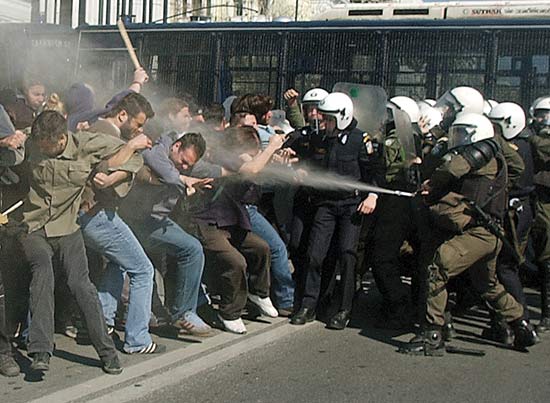 means od political participation. This link takes you to a page which shows the comparative rates of participation, though the text book argues UK participation rates in political demonstrations are even higher
Petitions – the most common form of political action in 2000 was signing a petition. Petitions come in two main forms e-petitions and paper petitions. Here’s a couple of examples of paper petitions Torbay fire petition and Mothers’ Day petition. While Change.org illustrates the process of e-petitions.
Internet – there’s growing evidence that more people are using the internet as a political tool, especially as a way participating in all the methods listed above (with the exception of physical demonstrations) you can demonstrate via the internet by creating/signing up to websites which boycotting certain things. Internet based or digital political activism is increasingly popular form of political activism with younger people. In addition the internet has seen a growth in political blogs a point discussed in this Guardian article.
Media – the electorate can write letters which are published in newspapers, or phone in radio or TV shows such as Question Time.
The following page examines the most popular forms of political participation. Despite such optimistic figures voter apathy remains a massive issue which is discussed here.

In pairs answer the following questions:
-
What is a trade union?
-
What is secondary picketing?
-
Who are the National Union of Mineworkers?
-
What is a SCAB (in political, not medical terms)?
-
Who was Arthur Scargill?
-
In Billy Elliot, there were two distinct social classes the working and middle-classes. Which political party would you expect them to vote for and why?
-
When Billy Elliot came down the stairs, you could hear a radio commentary talking about Thatcher calling the NUM the “enemy within”. How might a Marxist explain what Thatcher meant?
-
Using Marxist social theory, what were the police a part of and what role did they play?
-
Using neo-Marxist social theory, what role did the police have?
-
Using neo-Marxist social theory what role did the media have? And what evidence did Stuart Hall come up with to support his point?
-
Using the film find some evidence of for each of Lukes’ faces of power at work.
-
When Billy Elliot came down the stairs, you could hear a radio commentary talking about Thatcher calling the NUM the “enemy within”. How might a neo-Marxist explain what was occurring?
-
What type of power were the miners using when they were protesting? Why didn’t they have enough power to set the agenda on mine closures?
-
What were the miners striking about? How was Thatcher’s government able to implement its policy to close non-productive mines? Why was their decision see as legitimate?

Shirley Valentine is a useful film to help students understand the feminist perspectives of the family. Indeed it’s useful for developing criticisms of functionalist perspectives.
Watch the film (below is a short clip to refresh your memory about the film) and then in groups answer the following points:
-
In what way is Shirley Valentine stratified in her marriage?
-
How is Shirley Valentine stereotyped?
-
Why is Shirley Valentine socialised into her social role?
-
What sociological theme can be used to make a connection between Shirley Valentine’s daughter; her best ‘feminist’ friend and the people in the hotel restaurant?
-
Shirley Valentine is a feminist film. Does the script writer Willy Russell take a Marxist feminist or a Radical feminist perspective? Indentify key points to explain your answer
-
How might the New Right criticise people like Shirley Valentine, especially if she’d left for Greece when her children were young.
-
How might Delphy & Leonard (1992) interpret the scene in Willy Russell’s script where the girls were discussing the clitoris?
-
What might have Margaret Benston (1972) focused on in the film?
-
How do Functionalist views on the family fail to consider female roles once the children have left home?
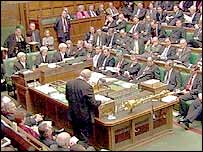
Now that you have an understanding of power we can now move onto the UK political scene, because this is where power in society is used to help create our democracy in the UK state
But what is the UK state and is it a sovereign state ? Find out what-is-the-uk-state. Is our sovereign state a democracy? Find out democracy-or-totalitarianism
How do people vote within our democracy? In the UK we have an electoral system known as the First-Past-the-Post system. Find out more about this system here. The UK political landscape is cut-up into constituencies, with each consitituency having a seat in Parliament. Uncertain about how Parliament works? Then visit this site for a guide through the Parliamentary processes and this site for an A-Z on Parliament.
Before you read further down this article click on this link to watch a step-by-step guide on what how to cast your vote on election day.
Now follow this link for a step-by-step guide and look at the results of the 2005 election here and look at the political map generated by the results from the last general election – results of other general elections.
But who can I vote for? Follow this link to find out what the choices are. But what is the difference between the main political parties? Find out what their philosphies are political-ideologies-grid
You might also wonder what influences an individual’s decision where to cast their vote.
How has the political landscape changed? Follow this link to see the changes on the political landscape since 1970. In order to gain some understanding of how UK politics moved from Left to Right between the 1970s and 1980s watch the film Billy Elliot.
The film works on two levels. The main narrative is about cultural changes, particularly that of Billy Elliot’s  family accepting that he can remain a ‘man’ and be a ballet dancer. While this cultural change is occurring, there’s also a political change coming to a resolution that of the miners’ strike. Though these two changes are in some ways interdependent – cultural influencing the political and visa versa. It’s the political change from Right to Left that we will focus on especially in relation to power. Follow this link after watching the film Billy Elliot.
The above text looks at the processes and outcomes of a General Election. But this is based on the asumption that everyone votes. If you look in more depth at the results of the 2005 election, constituency by constituency, you will see not everyone voted. Only a percentage of people voted. To understand what I mean look at the results of Christchurch and Portland & Weymouth. Particularly examine the ‘turnout’ figures which show a significant number of people failed to vote.
It’s important to recognise that in democracies there are various ways in which people can participate democratically.
Task – Identify other ways people particiapte politically
People participate politically through the following ways – next lesson
by Sam Cook a former student
Elite theory explains the power relationships in modern society as one held by a tiny elite. It argues that a small minority, consisting of members of a social elite who hold power no matter what happens in elections in a country because of their innate characteristics. For Pareto it is the psychological traits or characteristics of elites which separates them from the masses. He classified elites into two types – those with the power or traits of ‘lions’ who use force to gain or retain power like military dictators and those who had the traits of a ‘fox’ using cunning and guile to get their own way. While this classical elite theory is often criticised for its simplicity.
Elite theory stands in opposition to pluralism in suggesting that democracy is a utopian ideal. It also challenges any theories which argue the state acts as an autonomous institution. Before you read the more ‘academic’ explanations of elite power, it’s worth looking at recent comments on the power of elites by The Guardian’s Owen Jones and the power of Whitehall civil servants who run the UK like Sir Humphrey Appleby as discussed by The Times’s Rachel Sylvester.
Elite theory is explained in general elite-theory1. The work of C. Wright-Mills is explained in greater depth the-power-elite while this link explores the relationship between Weber and C. Wright-Mills with the middle-section providing excellent resources on the power elite. Recently ex Prime Minister John Major discussed the extent to which C Wright Mills ideas are being played out in contemporary UK society.
John Major argues a power elite is running Britain and undermining social mobility. It’s important to note that for Stanworth and Giddens, John Major represents their concept of elite recruitment which makes Major’s comments largely paradoxical. At the same time Tony Blair’s son, Nicky Blair has already established himself as successful football agent, therefore the question is which version of elite theory best explains this meteoric rise? In contrast this Guardian report examines the power of elite civil servants in the UK today.
Through positions in corporations, public schools and other social networks a small group of people run the country (rather than one individual). Their power comes from social privilege being passed from generation to generation mainly through inherited wealth and participation in privileged forms of education. To understand the extent of their privilege, take a look at Eton College here. and now read the influence and power of such social networks with The Times’ article Politics and the Oligarch here
So extensive is the hold of elites on the top jobs that in January 2009 the government has proposed to tackle the issues as so many top professions are dominated by elites even though academically they might not be as strong. Take the incident of Chelsy Davy, Prince Harry’s girlfriend who got a placement at a top legal firm while ‘only’ attending Leeds university to study law. You can read about this and more here.
In contrast Ian Budge’s fragmented elite model suggests (unlike C Wright Mills’ view of a cohesive elite) there’s a number of elites in Britain all competing with each other for power. This is evident with Cameron and Clegg having similar backgrounds but heading different political parties (the recent coalition does challenge this perspective and adds more weight to C Wright-Mills).
classical pluralism by Sam Cook a former student
Weber’s theories about power were further developed by Robert Dahl in the 1960s in his book ‘Who Governs?’. His theory is known as ‘classical pluralism’ for more details follow this link classical-pluralism.
The best way of understanding and seeing classical pluralism is through pressure groups. Follow this link to get a better understanding of pressure groups. The BBC has produced an even more detailed look at pressure groups here. Alternatively here are some of my detailed notes on pressure groups which you need to know. pressure-groups.
However there are criticisms of Dahl’s analysis of power which are available a-critique-of-classical-pluralism. This prompted David Marsh to develop his ideas which are known as elite pluralism (elite pluralism must not be  confused with Elite Theory which is discussed later). Here are some notes on elite pluralism elite-pluralism.
The key aspects of elite pluralism are:
- Elite pluralists such as Marsh say that classical pluralists are far too optimistic

- Elite pluralists recognise that all competing groups are not equal like classical pluralists suggest. For example the CBI – insider pressure group (Confederation of British Industry) has more power than the Fathers for Justice – outsider pressure group
elite pluralism by Sam Cook a former student
 Weber’s definition of power in society has remained the starting point for many sociologists. He defined power as being:
“the ability of an individual or group to achieve their own goals or aims when others are trying to prevent them from realising them”
- Charismatic authority – this type of authoritative power is based on ‘charisma’ – for example the personal qualities an individual has in order to influence a group or person.
- Traditional authority – this form of authoritative power comes from established customs passing power down on a hereditary basis – for example British monarchy
- Rational-legal authority – this form of authoritative power comes from certain groups having certain positions of power over subordinate groups – for example a policeman telling you to move
–
 Stephen Lukes’ perspective on power
Though Weber’s definition is accepted by many sociologists as their starting point in understanding power in society, many sociologists thought it was too narrow a definition.
In 1974 Stephen Lukes’ put forward his ‘radical’ view of power. This is discussed below:
According to Stephen Lukes there are three faces of power rather than one. He said to have an understanding of power you need awareness of all three.
1.THE FIRST FACE OF POWER: SUCCESS IN DECISION MAKING
– Pluralists have adopted this approach. Pluralist theories argue that power can be seen from the outcome of a decision making process. Whoever gets their way has all the power!
– Example, A has power over B to the extent that he can get B to do something that B would not otherwise do.
2.THE SECOND FACE OF POWER: MANAGING THE AGENDA
– Critics of the pluralist view, such as Peter Bachrah argue that simply studying decision making ignores a second dimension of power: the ability to control the agenda of debate.
– In their view real power lies in the ability to prevent certain issues from being seriously considered.
3.THE THIRD FACE OF POWER: MANIPULATING THE WISHES OF OTHERS.
– Power is the ability to shape the wishes and desires of others……without them even knowing! This 3rd face or dimension of power is known as Lukes radical view of power because it is so different!
Next lesson here
Some of the many reasons for changes in birth rate, increased life expectancy’ improved infant mortality rate and death rates are detailed below. Yet before you read through it’ll be worth your while watching this public service broadcast which explains the what public services are.
Advances in medicine, public hygiene and health education
- medicine – advances in medical science has improved medical treatments, drugs and surgical procedures

- public hygiene – the health benefits which come from clean running water and sanitation are fundamental to prolonging life
- health education – improved basic education such as reading and writing allows the general population to be taught basic levels of hygiene, diet, exercise, effects of drinking & smoking etc. so the population can take preventative measures.
- Note – some medial practitioners argue despite such education the UK populations diet is getting worse rather than better
Welfare state (social security)
- since the UK state established its welfare state in 1945 the nations health improved considerably through free access to health-care via the NHS
- free NHS provision lowered infant mortality rates as well as providing access to raft of previously chargeable services such as seeing a doctor which people had to pay for.
- the social capital provided by the NHS can be taken for granted. The following film describes the birth of this priceless institution -the National Health Service.
- Note – the Conservative Party’s privatisation of the NHS is seen by some political pressure groups as the dismantling of NHS
Nutrition
- massive decline in absolute poverty along with health education and higher living standards has enabled the population to access higher quality food
- improved living standards allowed people to refrigerate food and relatively more recently freeze food allowing access to fresh fruit and vegetables all the year round
- the subsequent improvement in diet reduced dietary diseases such as rickets
Working conditions
- from the Victorian period and beyond the 1950s working conditions have improved enormously with higher standards of health and safety at work has cut down the number of serious injuries
- other workplace conditions have improved from hours worked,
- longer holidays
- to an earlier retirement age
- have all contributed to reducing the physical and mental demands and subsequent health risks to workers
Individualisation
- postmodernist Beck puts it down to the rise of individualism, and children prevent people from doing the things they want to because of the restrictions they impose on adults. He also argues we live in more uncertain times, this uncertainly highlights risk, and one way people reduce this element of risk is not to have children.
All these factors contribute to fertility rates and average family size
Previously we’ve looked at trends in relation to divorce, marriage, cohabitation as well as trends (trend is an emerging pattern of change) in the concept of childhood.
Sociologists use the Office for National Statistics in order to examine data so they can explore trends over time. This ONS link provides interactive data on population trends in the UK between 1911 and 2011. The graph in the link shows emerging trends in population growth, births, deaths and family size known as demographics. This paper uk demographic trends discusses the various demographic trends on the family. The reasons for these changing demographic trends are examined in greater depth here.
Population growth
in 1901 UK population was 38.2m by 2006 it had grown to 60.6m. What has driven this population growth is natural change, every year since 1901 there’s been more births than deaths.
However since 2001 and 2005 other factors have driven population growth, with an average annual increase of 182,000 people in the population due to migration compared to an increase of 92,000 through natural change. Projected figures for the UK’s population through to the middle of this century are played out in this Office for National Statistics animation.
Births
- Actual births – overall there’s been a decline in the number of live births. In 1901 there were nearly 1.1m in 2005 there were 723,000
- Birth rates – these are measured in relation to the number of live births per thousand of the population per year. So if you have a birth rate of 28 then 28 live babies were born for each thousand members of the population in that year. The UK birth rate has fallen from an average of 28 in 1901 to 12 in 2005. So what does this tell you?
- Fertility rate – this refers to the average number of children a woman would have in her lifetime. This has declined from 2.95 in the 1960s ‘baby-boom’ to a record low of 1.63 in 2001 rising to 1.8 children in 2006 – this video explains factors influencing UK fertility rates
Death
- Deaths/mortality rates – the actual numbers of people dying in the UK has remained fairly even despite a rising population. In 1901 there were 632,000 deaths while in 2005 there were 582,000 deaths. Though the number of deaths is consistent what else does this figure tell you?
- Death rate – like the birth rate, the death rate this is measured per thousand. In 1901 it was 18.4 whereas in 2005 it was 9.4.
- Infant mortality rate – again this figure is per thousand and is measured in live births. Infant mortality rate in the UK has fallen from 142 in 1901 to 5.1 in 2005. Further reading here
- Life expectancy – this is how long a person can expect to live. In 1901 it was 49 years by 2005 it was 81 years for females. Life expectancy does vary from country to country and within the different regions of a particular country. See the following link for further details of demographic trends.
Family size – family size infographics
- There were 7.7 million families with dependent children in the UK in 2012, 1 in 7 of which had three or more dependent children
- Married couples had a higher average number of dependent children in their family than other family types, at 1.8 children per family compared with 1.7 on average
- The UK has a higher percentage of households with three or more children than three-quarters of European Union countries
Aging
the UK like most Western societies has an aging population. The predicted growth areas for the UK’s population are played out in this Office of National Statistics animation. This demographic change, along with new family forms (family diversity), are also impacting upon the position of older people within families.
- it is increasingly argued that families will be increasingly characterized by multi-generational bonds beyond the household, particularly between grandparents and grandchildren
- recent UK figures suggest that around a 30% of the UK population are grandparents and will remain so for an average of 25 years (Harper, 2005)
- 75% of the UK population will at some stage attain grandparenthood (Dench and Ogg, 2002)
- the expansion of the grandparent role across the span of an individual’s life, it is likely to occur while people are still engaged in numerous other social roles including work, associational and other family roles.
Some of the reasons behind these demographic changes are available.
Return to family overview
Visit here for more Office for National Statistics animations
 sociologytwynham.com
