
Marxist perspective by Sam Cook a former student
Marxist perspective of education-revision notes
Marx’s position about the ruling class was they have the power to control the working classes not with force but with ideas. These ideas justify their dominant position and conceal the true source of their power along with their exploitation of the subject class. Remember: Marxism is a belief that capitalism allows the owners of capital (the ruling-class or bosses) to exploit the workers (employees) and this causes conflict between the two classes (known as social-class conflict).
In Marx’s view this ruling class ideology is far more effective in controlling the subject classes than physical force, as it is hidden from the consciousness of the subject class – this is known as ‘false consciousness’. One example Marxists might use is the role of meritocracy in education to control the working classes by getting the working classes used to being rewarded for being good and doing as you’re told.
Education and Ideology
Louis Althusser (a Marxist) (1971) argued that the main role of education in a capitalist society was the reproduction of an efficient and obedient work force. This is achieved through schools:
- transmitting the ideology that capitalism is just and reasonable (school teaches you to compete with your fellow pupils by trying to do better than them)
- train future workers to become submissive to authority (schools teachers you to accept as normal to do as you’re told, this way when your boss orders you what to do, it seems perfectly normal)
Althusser argues that ideology in capitalist society is fundamental to social control and education is instrumental in transmitting this ideology. He argues education is an ideological state apparatus which helps pass on ruling class ideology (for example ideology) in order to justify the capitalist system.
Bowles and Gintis’s (Marxists) research ‘Schooling in Capitalist America’ (1976) supported Althusser’s ideas that there is a close correspondence (known as the correspondence principle) between the social relationships in the classroom and those in the workplace. Through the hidden curriculum (it is vital you follow the hidden curriculum link). Bowles and Ginitis argue schools introduce the ‘long shadow of work’ because schools create a hard-working disciplined workforce for capitalist societies. This process is essential for social reproduction – the reproduction of a new generation of workers schooled (disciplined) into accepting their role in society. This occurs through:
School and workplace – school mirrors the workplace through its hierarchical structures – teachers’ give orders and pupils obey. Pupils have little control over their work – a fact of life in the majority of jobs. Schools reward punctuality and obedience and are dismissive of independence, critical awareness and creativity – this mirrors the workplace expectations. The hidden curriculum is seen by Bowles and Gintis as instrumental in this process.
Social inequality – schools legitimate the myth of meritocracy that every person in life has an equal chance to reach the top. This myth justifies the belief that those people who have reached the ‘top’ deserve their rewards because they achieved them by their own had-work (meritocracy). In this way inequality becomes justified.
However Bowles and Gintis argue that rewards in education and occupation are based not on ability but on social background. The higher a person’s class or origin the more likely they are to attain top qualifications and a top job. For Bowles and Ginitis, schools are institutions which legitimize social inequality. See Bourdon (position theory); Bourdiau (cultural capital) ; and Bernstein ( language and class).
Assessing Marxist and functionalist perspectives of education.
To appreciate the subtle differences between Functionalist and Marxist perspectives on education please work through the following presentation then test your knowledge Marxism test questions only Click on this link for the 15 questions
functionalist perspective by Sam Cook a former student
Functionalist perspective of education-revision notes
In same way the Family module has competing perspectives so too does the education unit.
The first perspective we’ll look at is the functionalist perspective. As you will remember functionalists look at the function or role of an institution in society in keeping the social body ‘functioning’ (working) properly. Functionalists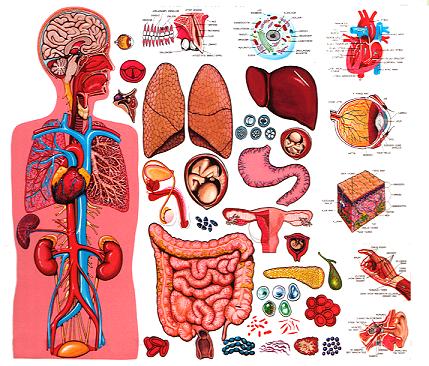 usually begin their sociological analysis with the following questions:
- How does education contribute to the maintenance and wellbeing of society?
- What are the relationships between education and other parts of the social system?
Emile Durkheim (functionalist) – writing over 100 years ago that one of the main functions of education is to bind members of society together – this creates social unity and solidarity. Therefore like the family, education is seen as functional prerequisite because it passes on the culture of a society particularly its core values.
Talcott Parsons (a functionalist) writing in the 1950s and 1960s developed Durkheim’s ideas. He said education is a key component of the social body, just like the heart is integral to the functioning of the human body, education is fundamental to the health of the social body.
It does this by:
- Passing on society’s culture – education functions as a key mechanism (functional prerequisite) through which a new generation of children acquire the ‘central’ norms, values and culture of their society. This unites or glues people together by giving them shared values, what sociologists’ term as a value consensus, through the ‘hidden curriculum’.
- Socialisation – Durkheim argued that schools are a ‘society in miniature’ – a small scale version of the wider society in which people live and work. Talcott Parsons argued how schools from this standpoint, take over the primary socialisation role of parents. This means schools are sites of secondary socialisation. They, the schools, provide a bridge between the ‘particularistic’ values of the family and the ‘universalistic’ values of meritocracy of contemporary industrial society.
- Providing a bridge the particularistic values and universalistic values. Particularistic values are those given to you by your family, they treat you as an individual, they take account of your own individual skills, abilities, and habits and from these particularistic values your status within the family has been ascribed. In contrast universalistic values are those given to everyone, the same rules apply to everyone. As an individual you aren’t afforded any special considerations and your status is now achieved rather than ascribed. Therefore you might have a high ascribed status at home but a low
 achieved status at school because you never do any work.
 - Providing a trained and qualified labour force – schooling provides society with people equipped with the right skills to due the jobs society needs. This makes sure the best and most qualified people end up doing the jobs that utilizes and recognises these skills, qualifications and individual effort. This creates what is termed as the division of labour – whereby the world of work is fragmented into a large number of specialized jobs. From this position the inequalities in society are fair and just, everyone is given and equal chance, it’s merely that some people work hard and succeed and others choose to be idle, mess about in class and only have themselves to blame for their failure. Therefore people who work hard at school become dentists while those that don’t become binmen – known as meritocracy. Which one are you?
- Meritocracy– Davis and Moore (functionalists) said as we know live in a meritocratic society the education system becomes the best mechanism for selecting the right people for the right jobs – role allocation. Meritocracy is the notion that people should and are duly awarded by society for their hard work and efforts. Those that work hard will and can achieve those that choose not to, achieve their due rewards.

Assessing Marxist and functionalist perspectives of education.
- Before you move to Marxist perspective it’ll be useful if you test your functionalist knowledge Functionalism test
- To understand the difference between universalistic and particularistic values think of this. Imagine you were brought up at home to eat with your hands at every meal time. Eating with your hands would be a value particular to your family – hence particularistic value. But when you go to school and starting eating school dinners you discover you’re the only person eating with their hands. So the teachers teach you to eat with a knife and fork like all the other children which is an eating method valued by everyone – hence the term universalistic value.
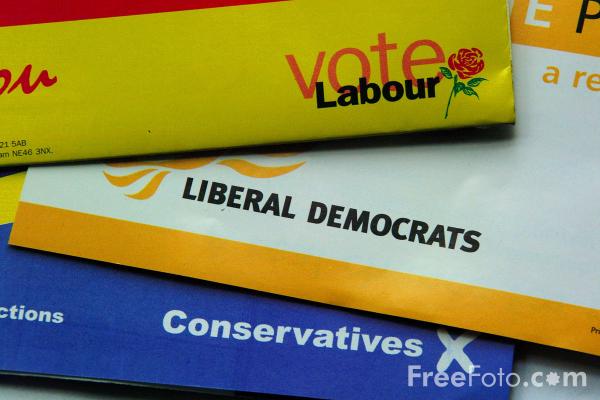 New Right thinkers have questioned the advancement of the states involvement in capitalist societies. The phrase ‘nanny state’ is often banded around by Conservative politicians as meaning the state pokes its nose too much into the lives of ordinary citizens. For New Right thinkers the state should be ‘rolled back’ and the free market left to coordinate society rather than the state intervening so much.
New Right thinkers question the value of so much state welfare and instead prefer the state to encourage self-reliance instead of welfare dependence. By rolling-back the state people will have greater individual freedom and by paying lower taxes people will be stimulated to make society far more dynamic, competitive and efficient.
Key names in the New Right (neo-liberal) perspective are Milton Friedman and Peter Bauer. They both emphasised laissez-faire economic policy, otherwise known as a free market economy. In Capitalism and Freedom, Friedman argues the existence of a free market does not eliminate the need for government. On the contrary, government is essential both as a for deciding the rules of the game but as an umpire overseeing the rules are played correctly. Such a process reduces the issues politicians have to get involved with because the free market co-ordinates society so well. It gives people what they want instead of what a particular group thinks they want.
Friedman position was governments should only get involved with four areas of the economy:
- Defence
- Law and Order
- The provision of the necessary public works that private enterprise doesn’t find profitable
- Protection from members of the community who ‘cannot be regarded as responsible individuals.’
Peter Bauer advocated additional responsibility’s for government
- Health and education
- The management of monetary and fiscal (tax/spending) system
In essence Friedman and Bauer’s free-market economy does not eliminate the need for government it simply ‘rolls it back’ to a minimum because the production, distribution and trade of goods and services is best left to private profit making firms rather than public government (state run) organisations. In other words business should be free of government interference to do as it wishes as ‘exchange can bring about co-ordination without coercion. A working model of a society organised through voluntary exchange is a free enterprise exchange economy’ (Friedman). These principles were famously adopted by Mrs Thatcher who started introducing free market economic policies in education – 1988 Education Reform Act – marketization of education.
Noam Chomsky’s book Profit over People, 1999, argues that neo-liberal economics has reduced the power of ordinary people to influence government policy as it has merely served to increase the wealth and power of unelected executives of corporations. Chomsky points out reducing the role of the state (and its size) restricts its capacity to improve or assist vulnerable people in society. Therefore reduced state involvement, reduces the power of the state to shape society according to its wishes (state centred theorists) or the wishes of the people (pluralist state theory).
Foucault’s message was illustrate how the state uses discourses as mechanisms of normalisation. In effect the state tells is what is and isn’t normal to do and if you transgress from this normality than you’re in big trouble.
On example Foucault gave of this technique of normalisation was in the area of sexuality. He argued 18th century doctors created a variety of ‘sexual deviant’ categories which defined what was and wasn’t normal. From this masturbation, homosexuality, prostitution and other sexual fetishes were made abnormal and people who participated in such ‘deviant’ and ‘perverted’ acts were in need of treatment by because the dominant discourse of medical professionals said so.
However as mentioned earlier all forms of domination are open to resistance and the creation of a homosexual subculture resisted the dominant discourse to the extent a new discourse of ‘normality’ now exists.
The idea of the state defining what is or isn’t normal gives us an insight into what Foucault termed the ‘art of government’ as opposed to Weber’s understanding as of the state as simply about exercising power over citizens through for example in the use of ‘legitimate violence’ such as laws.
The art of government links with the idea of normalisation previously discussed, because the state for Foucault is no longer the act of government itself but is more about managing the population, institutions and social processes. One example of the state managing the population is through surveillance.
By examining the way the state used to punish people Foucault noticed there was a move way from punishing subjects to disciplining them. In the past Kings or Queens would torture or execute the body in order to reinforce the sovereign’s right to rule.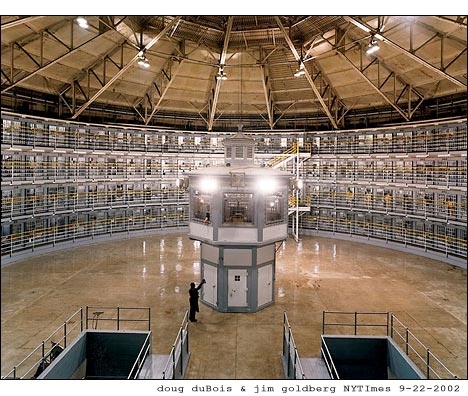
However Foucault examined Jeremy Bentham’s design of panopticon prisons which utilised the concept of surveillance in order to instil discipline rather than punishment by keeping a watchful eye on what inmates did during their time inside. Foucault noticed how surveillance has become a normal part of everyday life. He termed this the ‘carceral archipelago’ (an archipelago is a chain or cluster of islands)
It’s worth considering the numerous ways in which individuals are monitored by the carceral archipelago and the relationship between discourse and the carceral archipelago.
Return to power and politics overview
by Sam Cook a former student
All the previous theories of the state are known as structural theories because it sees people as being controlled or determined by external structures; individual’s behaviour being determined by patriarchy (feminism) or ruling-class (Marxism).
In contrast to these ideas come post-structural theories of power (after structure) which have a variable-sum approach to power. Michael Foucault argued power doesn’t operate through structures but discourses. Foucault’s concept of discourse is best understood as the are ‘the way we talk about something’.
What Foucault argued was the words or phrases we use to construct these discourses originate from knowledge. This knowledge comes from dominant social figures such as judges, doctors, social workers, psychiatrists etc., who have the knowledge and subsequent authority to establish ‘conversations’ about a social issue.
For example are the poor people with problems or people who are a problem? Our established conversations about the poor are dominated by established knowledge of poor people being ‘feckless’ or ‘undeserving’ or ‘ lazy scroungers’ – these words or phrases create an established discourse regarding ‘the poor’ as being a problem. In other words, as discourse is the established ‘way of talking about the poor’ as being a problem and punitive social policies are implemented which reinforce this.
However if the established discourse was the poor are people with problems, then ‘kinder’ social policies would be implemented to help the poor as they have problems.
New Social Movements, are movements because they try to establish a new discourse or a ‘new’ way of talking about something. For example environmental movements like Greenpeace are trying to establish a discourse which places environmental issues first and foremost. Therefore when politicians discuss expanding the economy, the issue of what such an expansion would have on the environment must come first and foremost.
At times discourse and ideology seem to tread very similar paths. Yet whereas ideology is associated with a ruling group deliberately creating a false consciousness (a false truth) in order to emasculate people. Discourses in contrast develop from knowledge and one discourse is no ‘truer’ than any other, as discourses are in constant battles of dominance. And this idea of dominance is critical, Foucault argues no one thing ever dominates, there are always endless opportunities for resistance, which is less likely than with Lukes’ ideas.
One example of Foucault’s concept of resistance is Ken Hinds. From being arrested by the Metropolitan Police using stop and search laws, he has been active in try to establish a new discourse on the use of stop and search. This process of resistance is less likely under Lukes’ fixed-sum approach to the concept of power.
However Poulantzas is critical of Miliband for putting so much emphasis on the social background of elites. Instead he argues the state is designed/engineered to first and foremost run in the interest of capitalism.
Because of this Poulantzas believes whoever runs the state – social elites or socialists – the state will operate to serve the interest of capitalism and therefore the state has relative autonmy from the ruling class. This could be one explanation of why Labour policies are seen to serve the interests of business rather than socialism. For example during the credit crunch the government found it hard to force banks to lower their interest rates even though they owned some of them!
This is because Poulantzas argues the state constrained by what is does because of the power of capitalism. To understand what Poulantzas means the ruling class isn’t one homogenous group as Miliband argues but a heterogeneous group with competing interests who are more interested in profit than controlling the proletariat.
For example in 2008 the post credit crunch banks wanted interest rates kept high while business leaders want them cut in the same way the rest of the population did. Therefore business leaders would seem to have more in common with the ordinary person. Yet at the same time business leaders aren’t looking after the ordinary person because they will have put pressure on the government to keep the minimum wage down! And so according to Poulantazs the state makes concessions and compromises in order to protect and serve capitalism.
Question – What type of social theory best explains Poulantzas’ view of the state?
Poulantzas neo-Marxist perspective uses Gramsci’s ideas concerning hegemony. He argues the state doesn’t simply retain the social class status quo by repressing the proletariat. Instead the state obtains consent of the work-class by achieving hegemony over beliefs and ideas. For an example of this read Society Guardian.
by Sam Cook a former student
Marx saw the state as a mechanism through which the interests of the ruling come first and foremost. For Marx the state is “but a committee for managing the common affairs of the whole bourgeoisie”.
Modern Marxist writers have developed Marx’s ideas even further. Ralph Miliband (yes the father of Ed Miliband)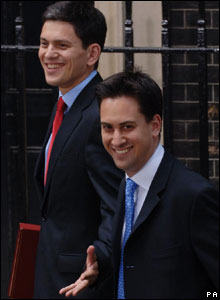 developed an instrumental view of the state. He argues the state is run by a number of elites who ran key institutions. These elites included cabinet ministers, MPs, senior police and military officers. Together they run to protect the ruling-class in order to preserve capitalism and private property.
However , though many of these groups listed are connected by a similar social and educational background, for Marx these groups are best described as a ruling-class (elite) rather than a elites in the classical elite theorist sense. Therefore Miliband argues these groups have an interest in making sure things stay the same (status quo).
Miliband’s point is these elites use the state to make certain private property is defend at all costs in order to preserve the capitalist system, therefore the state is an instrument (tool) of capitalism. Where Miliband differs to Pareto, is he argues it is economic power through which the elites run things, whereas Pareto and C.Wright Miles argue it is the power of social networks and the inherent qualities of these elites which allows them to rule. In contrast Miliband merges C.Wright Miles’ ideas (Elite Theory) with those of Marxism
These ideas are reinforced by Louis Althusser who refers to the dominance of the ruling class as being dependant on numerous state institutions. Althusser is referring to state institutions such as the media, education system, the law, religion which operate as ‘ideological state apparatus’. In his view these institutions transmit the ruling class ideology which the proletariat passively accept.
Competing theories of the state
As with all aspects of sociology there’s no agreement between academics over complex areas of society, and theories about the state are no different. So we’ll now look at competing theories of the state starting with pluralist theories.
Pluralist theories of the state
Pluralists see the state as a mechanism which represents all the interests of every member of the state, in our case the UK state, and it works because it is not possible for the political process to directly represent the views of every single member of society as modern societies are so complex. Therefore a plurality of pressure groups acts as a representative voice for all members of society.
Davey and O’Leary say there are three pluralist views of the state
1. The weathervane model – this sees the state as acting like a weathervane by reflecting public opinion. For example if enough members of the public wanted to bring back hanging and Parliament decided to re-introduce because of public opinion then the state was acting like a weathervane by reacting to public opinion (via pressure groups). The question is, is Parliament viewed as being proactive or reactive?
2. The neutral state model – this model is dismissive of the above as it says the state gets more involved as it acts as a referee between the  competing groups. It does this by listening to all the views on an issue and then makes a decision. An example of this is the current issue over whether to have nuclear power stations to generate our electricity. The state’s decision is made on balance from assessing all the competing points of view and coming to a workable compromise. Therefore compared to the ‘weathervane mode’ the state is far more active.
3. The broker-state model – sees the competing groups in society as having their own agenda which reflect their particular issues. Therefore the state simply negotiates (brokers) between the vested interests of these groups and creates policies which satisfy the these groups while at the  same time reflecting the concerns of state officials. The best examples of this occur in Denmark, Norway and Sweden where there are regular meetings between strategic elites such as business leaders, unions and agricultural leaders in deciding the government’s economic policy.
 The modern state
We have already identified what the UK state is and examined what constitutes sovereign power. In order to examine it further it helps to understand what Weber defined the state as being. Weber defined the state as ‘a human community that successfully claims the monopoly of the legitimate use of physical force within a given territory’ and this provides clarity to what we uncovered about the state having legitimate authority over those people living within a specific geographical area.
For Weber the state was part of the rationalisation of society. This means everything people do has a ‘reasoned’ purpose as opposed to an emotive one. For example you go jogging not for fun but in order to keep fit for work. And so keeping fit has a deliberate outcome which is well thought out before hand. When a society is constructed on rational lines everything that society decides to do is based on clear reasoning.
For example education has a rational objective; to get people educated so they can contribute to  society. This rational process of educating citizens can only happen if there are enough people running large institutions like schools. This is known as bureaucracy. Bureaucracy is a term to describe all the people and processes which operate in order to run an organisation.
For Weber bureaucracy, or bureaucratic control, is the main instrument of the state. The state controls its population through bureaucratic control.
Question – think of an institution you are familiar with which operates through bureaucratic control?
Next lesson
by Sam Cook a former student
There is a raft of factors which influences the way people vote from social class to gender, ethnicity, age and regions. The influences of gender, ethnicity, age and region are explained in more detail here , while social-class is explored below.
There has been a change in voting patterns over time such as these. However there remains one fundamental factor which has a very significant factor for sociologist and that is social-class.
Social-class – from 1945 to the mid 1970s most of the electorate saw themselves as either Labour or Conservative voters and sociologists call this partisan alignment. There is a lot of evidence which indicates that social-class is the main engine in the creation of partisan alignment. This is because the working-class voted for Labour because they saw this political party as looking after their interests. In contrast the Conservative party was the party of the middle and upper-classes.
This relationship between social-class party identification and voting behaviour is known as class alignment. Butler and Stokes argued that class alignment in voting behaviour is due to political socialisation. This is where parents bring their children up to identify and become loyal to a particular political party. This is explained in more depth here.
In contrast partisan dealignment is where there is weakening between the electorate and their loyalty to a particular political party. Ivor Crewe and Bo Sarlvick (1983) research discovered there is a decline in loyalty to a particular party and this is known as partisan dealignment where the electorate feel no obligation to vote a particular way.
Crewe and Sarlvick’s argued that the reason for partisan dealignment is because there’s been a decline in class-based voting. For example a working-class person might vote Conservative (think Thatcher and council house sell-off).
Crewe and Sarlvick say the reasons for this change are as follows:
-
A decline in manufacturing industries and other heavy industries like coal, steel and shipbuilding mean their are very few men employed in these traditionally working-class occupations. The decline in these industries also precipitated a decline in trade union membership, and so a declining working-class electoral base
-
They found that the electorate was consistently voting by party policy and not party loyalty. This could be attributed to the decline of political socialisation within the home, as parents themselves shifted allegiance and so were less partisan in their way of voting.
Partisan and class dealignment is explained in more depth here.
-
(Remember all the above two areas identified by Crewe and Sarlvick fit neatly into Thatcher’s idea selling off of council houses, so working-class people could become home owners and were more likely to vote Conservative)
-
(Remember Billy Elliot! Think about whether his family remained loyal and partisan to Labout values. Do you think Billy’s brother and father dealigned themselves from Labour ideologies and insteaded adopted what Sarlvick and Crewe called the policy perference model ?) If you’re uncertain remind youself with the clip below..
 sociologytwynham.com