
This brief page helps explain the concept of social construction, particularly with regard to childhood. Social construction places its emphasis on the manner in which society establishes its norms, values and beliefs.
Using childhood as an example, our contemporary and stereotypical understanding of childhood is a period of time without any responsibilities, where play is the primary activity in order to allow young people to discover and nurture their potential.
As a society we value such a view of childhood to the extent any divergence from this belief as to what childhood is deemed abnormal. From this our society has created a common-sense notion of childhood should be like.
Some sociologists argue common-senses are ideological outcomes. This means ideologies (ideas) cement themselves into people’s minds to the extent they become normalised so any alternative position is seen as being wrong (a counter ideology). Opposing or counter ideologies often struggle to get recognition as they swim against the tide of the dominant idea(s).
Therefore if your childhood doesn’t meet the idealistic image promoted in the media or adverts you can possibly feel you’re missing out; when in fact childhood as an age status, is neither fixed or universal. Indeed the experience and meaning of childhood differs across societies, time periods and between different social groups.
Follow this link to our sociology revision books page where you can purchase our sociology revision book.






Heath, Jowell and Curtice (1985) argued party image was growing in its significance for the electorate particularly in relation to how class partisanship was now manifest in the ideological image portrayed by a political party. This is evident in the way Mrs Thatcher was told to drop ‘that hat’, then ‘the pearls’ but most importantly ‘the voice’. Much of this early change of image can be attributed to Gordon Reece a former television producer.
With his help Mrs Thatcher was presented in her early years as party leader as a non-feminist housewife before refashioning her  image through bolder outfits and a less shrill voice. We can see the extent image plays in the three clips below by examining the semiotics of clothing, hairstyle and scene setting are scene (mise en scene) as taking precedent over airing political policies, especially in the David Cameron clips. From this we can see the extent to which newspapers select certain images to convey certain meanings such as this picture of David Cameron in the Sun newspaper.
The extent to which image plays its part is explored in further detail here.
- Make a connection between anti-collectivism, housing, privatisation and Sarlvick and Crewe (policy preferences and dealignment)
- Make a connection between collectivism, nationalisation, traditional occupations and Butler and Stokes (partisanship, class alignment and political socialisation)
- Make a connection between Heath, Jowell and Curtice, political image in 1980s and political image today
- Make a connection between hegemony; free market and party image
- Make a connection between the influences of gender, ethnicity, age and region on voting behaviour
Prison numbers, just like crime statistics and suicide rates vary from country to country. Nevertheless being sent to prison is the most common form of punishment throughout the world.
The US has the world’s highest prison population rate at about 700 per 100,00 with the UK having the highest rate in Europe at around 140 per 100,00. This ratio means there are around 90,000 people incarcerated in UK prisons. In contrast to this Sweden is closing a significant number of its prisons due falling numbers of inmates. The following article explains what’s occurring in more detail.
The purpose of prison can be seen to have four key goals:
- Protect the public
- Punish criminal behaviour
- Reform criminals
- Deterrence
Before exploring the influence of Rupert Murdoch on UK and global politics it’s important to get handle on the extent and breadth of his News Corporation empire.
From following the above link it becomes clear that he meets the Marxist criteria of being described as a member of the ruling-class. 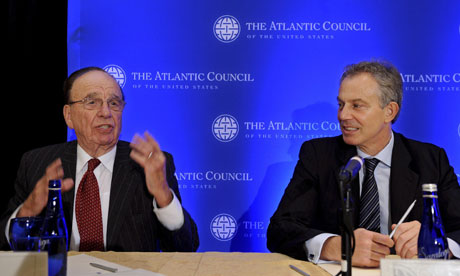 This is largely because he owns the means of (media) production within News Corporation. Marxists would subsequently point out as a media baron Murdoch can:
- have direct control of media content
- can and do interfere with media content
- follow this link for the remainder off these points
The extent of his power becomes evident in the way the Sun newspaper arguably influences UK politics. Polly Toynbee (Andrew Marr Show 24 November) said Murdoch had become key to electoral victories in the UK. The extent of the role of the Sun in shaping UK politics is briefly described on this page.
However neo-Marxists are critical of the Marxist approach. Simply writing one headline and expecting the Sun’s readers to do as they’re told is far too simplistic. Instead they are argue media effects occur over time. This is why the cultural effects model is so useful. The Sun will have had to encourage its readers over a significant period of time to vote a particular way – like a drip, drip, drip effect. This is because Gramsci argues the superstructure is cut in two halves, with political society using civil society to get its own way. Which is why some politicians and journalists have been concerned with the amount of private meetings Murdoch’s had with Cameron a process which occurred between Blair and Murdoch.
Notwithstanding the above points neo-Marxists say Media barons like Murdoch do influence the content of the media by:
- owners don’t get actively involved in controlling content on a day-to-day basis. Instead control and content is left in the hands of journalists and managers
- as managers and journalists want to protect their jobs they seek to attract advertisers and audiences by publishing suitable content. Sometimes audiences are attracted by media criticism of ruling-class, but such criticism is never threatening or damaging
- follow this link for the remainder of these points
Despite the above points pluralists have an altogether different take. They see the media as allowing a diverse of viewpoints to freely disperse themselves in society. They argue:
- owners do not have direct control over media content
- there’s no dominant class but competing social groups
- follow this link for the remainder of these points
Because of this they argue even with so many media outlets Murdoch doesn’t dominate the newspaper industry because there’s a wide selection of other newspapers giving alternative view points which is evidence of a pluralist press. In addition there’s a wide range of media outlets available for people to read and so get a variety of viewpoints.
There are two competing theories which attempt to explain who really controls what in the world. One, the pluralist theory, says that the world is run by hundreds of competing special interest groups. Everyone belongs to one or more of these groups, so everyone has some power.
The other is the power elite theory. It says that there are a handful of individuals (perhaps less then a thousand) who together effectively run the world. They aren’t some shadowy conspiracy that manipulates things from behind the scenes. Rather, they are the leaders of industry and politics whose decisions together dictate public and (to a large extent) private policy.
The modern interpretation of this idea was introduced and popularized by C. Wright Mills in his 1956 book entitled (appropriately enough) The Power Elite. He suggested that there were three types of power elite
- The Political Elite – These are the politicians who actually have the power to get laws passed. Not every senator or governor belongs to the power elite (in fact most probably don’t); only those who have enough influence to make laws and effect the decisions of their peers.
- The Business Elite – These are the leaders of industry. They have a lot of money, more importantly are in a position to have a major impact on the economy if they so desire. Most importantly, the world depends on their product to run, giving them a great deal of leverage.
- The Military Elite – These are the ‘top brass‘ of the various armed forces. Their power is of a more basic type; they have the skills and resources to wage war. People who want to wage war are dependent on them, and every else is frightened of them (or should be).
Certainly not everyone in these fields belongs to the power elite. When you look at it (according to Mills), each of institutions is really run by only a handful of people. The president and a few party leaders pretty much run politics. A few corporate owners and directors pretty much dictate how industry works. The military is run by its high ranking officers. His idea was not that the members of the power elite wield absolute power, at least not individually. Rather, it is only in collaboration that they run things. The government makes laws which govern society; industry produces what society needs (or thinks it needs); the military keeps society safe (from itself, if necessary). They are all intertwined and interconnected.
The close cooperation amongst the power elite is reinforced because they mostly all operate in the same social networks. This means they were educated at the same schools, meet at the same clubs and come from the same kinship. Because of this they tend to share a similar worldview, and other interests. This allows them to work together effectively, but also means that the reasoning behind their decisions is often not apparent to those outside of their social circle. Society is run by another society within it. The power elite is by no means a closed circle. Certainly people can join it, though it usually takes about three generations for a family to generate enough clout to promote one of its members into the elite circle. Inheritance helps, but is by no means necessary or sufficient.
The power elite doesn’t rule through repression or inheritance. Rather they rule through their positions. Each is in a position where certain people listen to them, thus they can control some aspect of how things work.
 In the three years leading up to the 1992 election, Labour had consistently topped the opinion polls, with 1991 seeing the Tories (rejuvenated by the arrival of a new leader in John Major the previous November) snatch the lead off Labour more than once before Labour regained it
On the day of the general election, The Sun newspaper ran an “infamous”[front page featuring Kinnock (headline: ‘If Kinnock wins today will the last person to leave Britain please turn out the lights’) that he blamed in his resignation speech for losing Labour the election, along with other newspapers who had backed the Conservatives in the run-up to the election.
The following day’s headline in The Sun was the triumphalist ‘It’s The Sun Wot Won It‘.

However a few years later in 1997 the Sun switches allegiance and tells its readers to switch their alliance from Conservative to back Labour’s Tony Blair.
Then in 2010 the Sun encourages its readers to vote Conservative and vote for David Cameron.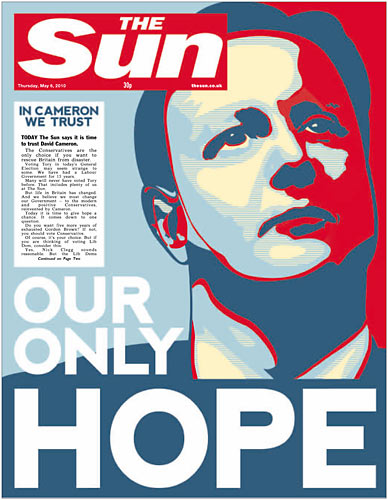
Does Big Business run Britain?
Is Marxism still relevant today?
The End of History? Was Francis Fukuyama right?
Evaluate the role of the mass media in the political process (33 marks)

 sociologytwynham.com