Skip to content
October 22, 2014 / C H Thompson

Women aren’t ‘better’ at housework

Women aren’t ‘better’ at housework – but men sure are better at avoiding it

If we’re too damn tired from doing so much work at home, how are we supposed to make progress on more urgent issues?

woman housework
The gender gap in housework isn’t about men being dirtier. Stone/Getty Creative Photograph: Stone/Getty Creative

Could it be that talking about who does the chores is, well, a chore?

Housework is boring, so it makes sense that arguing about it – or trying to battle the gender inequality around it – would also be pretty mind-numbing. After spending a day picking up socks, no one really wants to talk about who picked up the socks. And, in a political climate where reproductive rights are under constant attack and rape and domestic violence are still at epidemic levels, it can feel a bit trite to bring up the laundry.

But caring about equality across the board shouldn’t be a zero sum game, and women are not going to be able to make progress on more urgent and public and political issues if we’re too damn tired from doing so much work at home.

So it will not surprise any woman to learn that the latest numbers from the US Bureau of Labor Statistics show that women are still doing a lot more housework than men – over three times as much, in fact. (We do twice as much in the UK, apparently, and a whole lot more than that east of Europe.) If your eyes are already starting to glaze over, you’re not alone: every year, in every country, the same sort of statistics come out, and every year there are a few articles pointing out the disparity and every year, in every country, nothing changes.

And while men are doing some housework – in Germany men spend an average of 90 minutes a day on domestic work, in Turkey just a measely 21 – it’s not just mopping that needs doing. Statistics say that American women are spending about 6 hours a week on housework – but that’s really 8.5 if you count household management. So it’s not just physical labor – like vacuuming or scrubbing toilets – that’s running us down, it’s the day-to-day mental work. We’re not just shopping, we’re making the grocery lists. We’re not just cleaning, we’re figuring out what’s dirty.

Thinking about doing chores may not seem like a lot of work – but consider what an incredible privilege it is to have your mind free of multitasking. Men who don’t have to think about which chores have to be done and who is going to do them have the luxury of headspace to think more about work, hobbies or any damn thing they want. Women, meanwhile, are trying to figure out if the kids need any more juice boxes that week. (Speaking of kids, the latest numbers don’t even take child care into account, a huge – albeit cute – time suck for women.)

The more we all let men get away with saying that they just “don’t care” about filth or that women are somehow naturally better at picking up around the house, the longer the chore disparity will last. Yes, sometimes just washing someone else’s dirty cup feels easier than making a stink about why it’s been sitting on a dresser for two days. But rolling our eyes or quietly seething only ensures another, dirtier cup around the corner.

As boring as housework can be – as a literal chore or as a political issue – we can’t continue to treat it as ancillary to the larger fight for women’s equality. What happens in our homes matters, as does women’s time and how they spend it. It’s core to feminism.

theguardian.com, Wednesday 22 October 2014 12.30 BST

October 22, 2014 / C H Thompson

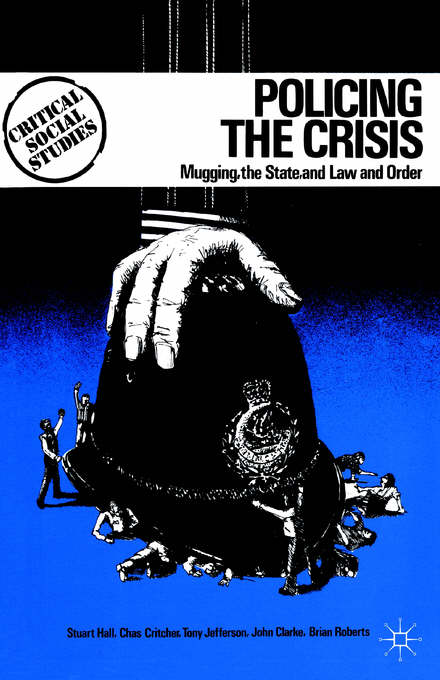
Stuart Hall – Policing the Crisis

Mugging, The State and Law and Order (original version Policing the Crisis)

In the 13 months between August 1972 and August 1973, 60 events were reported as muggings in the national daily newspapers. Dramatic individual cases of such crimes were highlighted in the media.  On the 15th of August 1972, Arthur HillsPolicing the Crisis was stabbed to death near waterloo station.

For the first time, a specific crime in Britain was labelled a mugging in the press. On the 5th of November 1972, Robert Keenan was attacked by three youths in Birmingham. He was knocked to the ground, and had some keys, five cigarettes and 30 pence stolen.  Two hours later, the youths returned to where he lay, and they viciously kicked him and hit him with a brick.

It was stories such as these that highlighted an apparently new and frightening type of crime. Judges, police and the politicians lined up with the media in stressing the threat that this crime posed to society.  Many commentators believed and thus the discourse became, that the streets of Britain would soon become as those in New York and Chicago. The Home Secretary in the House of Commons quoted an alarming figure of a 129 per cent increase in Muggings in London in the previous four years.

Hall et al. see these reactions as a moral panic. (An exaggerated outburst of public concern over the morality and behaviour of a group in society). Hall tried to explain why there should be such a strong reaction to, and widespread fear of, mugging.  Hall rejected the view that the panic was inevitable and understandable reaction to new and rapidly increasing forms of violence. As far back as the nineteenth century, footpads and garrotters had committed violent street crimes similar to those of the modern mugger.  Violent robberies were not, therefore a new crime at all – indeed, as recently as 1968, an MP had been kicked and robbed in the street without the crime being labelled a mugging.

Hall noted that there is no legally defined crime as mugging.  Since in law there is no such crime, it was not possible for the Home Secretary accurately to measure its extent. Hall’s study found no basis in the criminal statistics for his figure of 129 per cent rise over four years.  From Hall’s examination of the statistics there was no evidence that violent crime was particularly rising fast in this period leading up to the panic.  Using the nearest legal category to mugging – assault with intent to rob – the official statistics showed an annual rise of an average of 33.4 per cent between 1955 and 1965, but only a 14 per cent average annual increase from 1965 to 1972.  This type of crime was growing more slowly as the time the panic took place then it had done so in previous decades.

For these reasons Hall could not accept that the supposed novelty or rate of increase of the crime explained the moral panic.  He argued that both mugging and the moral panic could only be explained in the context of the problems faced by British capitalism at the start of the 1970s.

Capitalism, crisis and crime3 day week
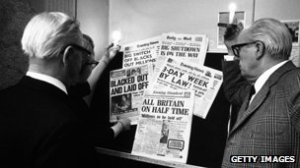
Economic problems produced part of the ‘crisis’.  Hall accepted the Marxist view that capitalist economies tend to go through periods of crisis when it is difficult for firms to sell goods at a profit.

The crisis of British society, however, went beyond economic problems.  It was a crisis of ‘hegemony’.  Hegemony is political leadership and ideological domination of society.  Accordingly, the state tends to be dominated by parts of the ruling class.  They attempt to win support for their policies and ideas from other groups in society (to maintain power).  They try to persuade the working class that the authority of the stating exercised fairly and justly in the interests of all (not just themselves).  A crisis in hegemony takes place when the authority of the state and the ruling class is challenged. (As it is in Egypt currently)

In 1970-72 the British state faced both an economic crisis and a crisis of hegemony.  From 1945 until about 1968 there had been what hall called an inter-class truce, there was little conflict between the ruling and subject class.  Full employment, rising living standards and the expansion of the welfare state secured support for the state the acceptance of its authority by the working class.  As unemployment rose and living standards ceased to rise rapidly, the basis of the inter-class truce was undermined it became more difficult for the ruling class to govern by consent.

Hall provides a number of examples of the challenge to the authority to the hegemony of the state.

  1. Northern Ireland generated into open warfare.
  2. There was a growth in student militancy and increased activity in the black power movement
  3. Trade unions were seen to pose the biggest threat as miners launched ‘flying pickets’ to prevent coal from reaching power stations/key industries and so hold the state to ransom

Since the government was no longer able to rule by consent, it turned to the use of force to control the crises.  It was in this context that street crime became an issue.  Mugging was presented as a key element in a break-down of law and order.  Violence was portrayed as a threat to stability of society, and it was the black mugger who was used to symbolize the threat of violence.

In this way the public could be persuaded that society’s problems were caused by ‘immigrants’ rather than the faults of the capitalist system they are (people may steal because they are ‘made’ poor)  The working class was effectively divided on racial grounds, since the white working class was encouraged to direct its frustrations towards the black working class. (Divide and rule?)

Crisis and the control of crime

The government was also able to resort to the use of law and direct force to suppress and groups that were challenging them.  Force could be justified because of the general threat of violence.  Special sections of the police began to take action against the ‘mugger’.  The British Transport \police was particularly concerned with the crime on the London underground.  |Hall claimed that the police in general and this special squad in particular, created much of the mugging that was later to appear in the official statistics.

Hall gives as an example of police pouncing unannounced of African-Caribbean youths of whom they were suspicious.  Often this would provoke violent reaction in self defence by the youths, who would then be arrested and tried for crimes of violence.  Many of the muggers’ who were convicted following incidents like these had only police evidence used against them at trial. ‘Victims’ of their crimes were not produced because hall implied there were no victims in some cases. Labelling helped to produce the figures that appeared to show rising levels of black crime, which in turn justified stronger police measures.

Hall did not claim that the reactions to crime, ‘mugging’, and other ‘violence’ were the result of a conspiracy by the ruling class.  The police, the government, the courts and the media did not consciously plan to create a moral panic about street crime; the panic developed as they reacted to changing circumstances.  Neither where the media directly manipulated by the ruling class or the government; different newspapers included different stories, and reported mugging in different ways.  Nevertheless, there was a limited range of approaches to the issues in the press.  Most stories were based on police statements or court cases or were concerned with the general problem of the ‘war’ on crime.  Statements by the police, judges and politicians were therefore important sources of material for the press. Consequently, the newspapers tended to define the problem of mugging in similar ways to their sources; criminal violence was seen as senseless and meaningless by most of the press. It was linked to other threats in society such as strikes, and was seen and portrayed as a crime that needed to be stamped out as quickly as possible.

(Adapted from Haralambos and Holborne, Sociology Themes and Perspectives)

October 21, 2014 / C H Thompson

Changing functions of the family

changing functions of the family

October 21, 2014 / C H Thompson

Test yourself on the family

Below are several Powerpoint tests.

The vast majority are multiple choice so you can easily measure the extent of your knowledge. However the later tests do have one or two AS exam style questions designed for you to assess the extent of your understanding too.

Good luck!

Family Test 1 questions

Family Test 2 questions

Family Test 3 questions

Family test 4 questions

Family test 5 questions

Family test 6 questions

Family test 7 questions

If you would like the answers to all the questions in the 7 family tests above they are available for a single payment of £3.99 via the PayPal button below entering Family Tests as the order description.

Once your order has been placed I’ll send the Powerpoints complete with answers to you.

If you have any questions regarding any aspect of this process please post a comment in the box below and I’ll answer your question.

All payments received are used to help keep this free site avaliable.

Buy Now Button with Credit Cards

October 21, 2014 / C H Thompson

Theories of the State

Open the attached file for a basic overview of theories of the state – excluding globalisation

Theories of the state2


January 28, 2014 / C H Thompson

Anti-capitalist movement

The internet is often considered a symbol of globalisation especially its capacity for transmitting ideas and capital at a global level. Along with globalisation, the internet provides opportunities as well as challenges for NSMs. It has expanded political communications between diverse groups on a local as well as global level.

In addition technology has increased the speed and range of communications by providing NSMs with the impetus for change in the same way printing, postal services and telephone systems did for OSMs.

However though informal connections provided by new technologies provide for a more ‘loose’ membership encouraging more tentative members of society to become politically active, it also has the downside of lacking face-to-face contact along with the benefits of commitment and political integrity formal membership provides.

The Anti-Capitalist movement meets the above criteria but additionally it is also an anti-globalisation movement, this recently manifest itself in the Occupy movement.

January 15, 2014 / C H Thompson

Put simply globalisation is…..

The following powerpoint provides an overview of Globalisation covering many key points

Globalisation is where the power of national boundaries are becoming less significant……

  • Proponents of globalisation argue globalisation has weakened the power of nation states in the areas identified below
  • Global communication systems enables consumers to purchase goods from almost anywhere in the world, for example ebay. This shift has moved economies from local to global processes
  • Global brands such as Apple, allow global corporations to create a global culture through brand association
  • Politics and political action has become globalised, for example anti-capitalist movement
  • Global movement of people through air travel, tourism etc means that diseases are harder to contain within national boundaries (bird-flu; HIV etc)
  • Transnational corporations such as Ford, Apple are seen to have more power than nation states

Economic globalisation has seen the growth of transnational companies/corporations (TNCs)

  • TNCs operate in a large number of countries, have their headquarters in a nation of convenience making them beyond control of individual nation states
  • TNCs like Ford, Apple move production and investment to any country where economic conditions best suits them, for example Apple’s European HQ is in Cork, Ireland
  • TNCs use countries of convenience like China to produce their goods because labour costs are low and there’s little or no trade unionism
  • Individual nation states no longer have the power to control the activities of TNCs and so have lost a significant amount of power over their own economies
  • As a consequence of the above some TNCs are now more powerful than many governments

Political globalisation reduces the power of nation states

  • Nation states are increasingly forming transnational organisations such as the European Union; United Nations and the North Atlantic Treaty Organisation
  • These mergers form organisations effectively blur the boundaries of sovereignty by shifting powers from the nation state to transnational organisations. For example EU law now has precedence over a significant amount of British law.
  • For some commentators Like Ukip’s Nigel Farage this shift in power from the nation state to transnational organisations erodes national democracy by handing it to an EU bureaucracy – see clip below

Cultural globalisation and heterogeneity

  • The growth in online communications through popular platforms such as Facebook; Twitter, Youtube; Sky TV has resulted in the world sharing Western values, culture, lifestyle through broadcast media including advertising to create a heterogeneous global culture
  • This is seen to be creating a global culture whereby the whole world recognises brands such as Apple, Coca Cola
  • A global culture via online communications makes it difficult for nation states to control its citizens access to information

A word of caution

Hirst and Thompson acknowledge globalisation has eroded power of the nation state but they argue it’s over emphasised as nation states power over foreign policy and the military remains along with their citizens sense of national identity.

Globalisation and anti-capitalism

December 18, 2013 / C H Thompson

Process of privatisation of NHS

NHS

December 18, 2013 / C H Thompson

Marriage timeline

Marriage_Timeline

December 18, 2013 / C H Thompson

Same Sex Marriage Becomes Law

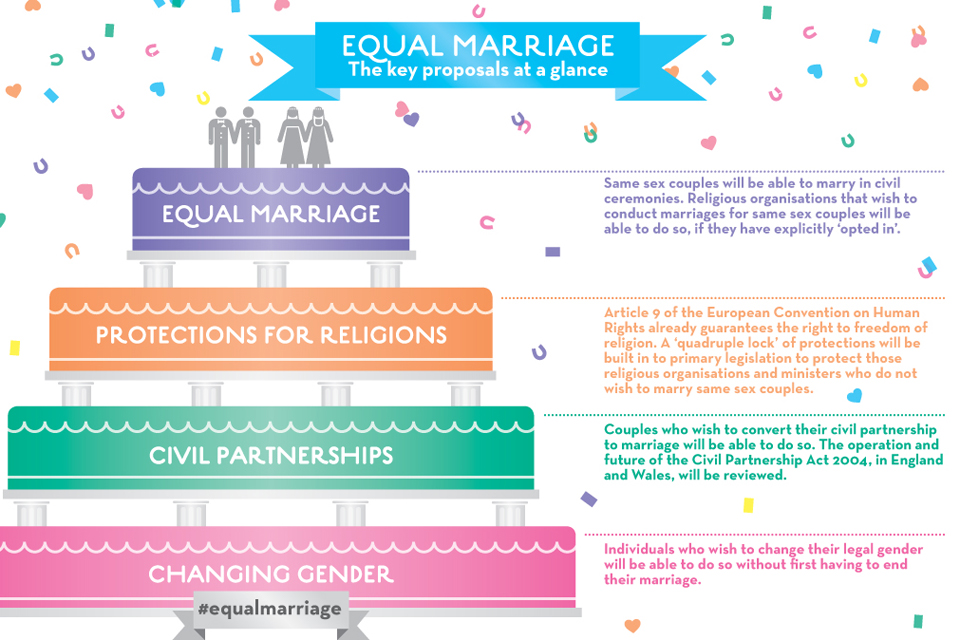
The Marriage (Same Sex Couples) Bill completed its historic journey through Parliament by receiving Royal Assent in December 2013, officially making it law. The Government also announced that the first same sex wedding could take place by as early as summer 2014.

What does the act allow? The Act, which applies to England and Wales, will:    Equal Marriage Proposals

  • allow same sex couples to marry in civil ceremonies
  • allow same sex couples to marry in religious ceremonies, where the religious organisation has ‘opted in’ to conduct such ceremonies and the minister of religion agrees
  • protect those religious organisations and their representatives who don’t wish to conduct marriages of same sex couples from successful legal challenge
  • enable civil partners to convert their partnership to a marriage, if they wish
  • enable married individuals to change their legal gender without having to end their marriage