
 There are three different methods for recording crime. These are Home Office Figures (otherwise known as Police Records or Official Figures); British Crime Survey and Self-Report Studies.
Home Office Figures show the number of crimes recorded by the police. These figures are seen to be objective as the criminal data is recorded by the police themselves. However there are issues surrounding the recoding of any data by officials which is evident in this article.
In contrast the British Crime Survey is otherwise known as a ‘victim study’. This is because you get asked to record the number of crimes which have been inflicted on you. Whereas as Self-Report Studies ask for the number of crimes perpetrated by you! The trouble is if you were wearing anti-rape knickers what would any assault be recorded as?
The slide below identifies all the main characteristics of each statistical measure. Look through the table and then answer the following questions beneath this slide.
Task 2 – please complete questions 1 to 4 before moving on.
We now come to our first synoptic section of the course. Because part of this unit is about focusing on crime statistics it requires a comprehensive understanding of the research methods used to compile these statistics, so you can assess the strengths and weaknesses of these methods.
To fully comprehend the diversity of methods used, it’s useful to read this article on the research methods used by academics to understand the motivations in UK hitmen. As you will remember you studied research methods at AS. You now need to apply this knowledge to this unit, which we will now do in Task 2!
Task 2 – The reasoning and complications surrounding crime statistics and the different methods used to collect this data is examined in the following research methods page. You will need to read through the research methods page in detail in order to answer the remaining question in Task 2.
As well as understanding the different methods used you need to understand the principles behind each research method. This is a key piece of learning for this module as research methods is one of the main synoptic links.
To help you understand this process listen to the following Radio 4 clip and take as many notes as you can on the research methods used. Then, using the information you’ve gathered complete the chart below.
This whole unit is going to focus on crime and deviance but how do we know how much crime there is in the UK?
There is a range of statistics used to record the amount of crime in the UK. However before we examine the different statistical methods in more detail, the first thing we have to appreciate is the fact not all crimes are recorded or reported.
This might come as a shock, but there is a significant amount of crimes which go unrecorded. Unrecorded crimes are known as either ‘dark figures’ or ‘hidden crimes’, because the crimes did occur, it is just they were never recorded for example elder abuse.
The document below presents a more detailed account of the main reasons why these ‘dark figures’ exist. And the second page of the document has a small task which needs to be completed.
The problem with crime statistics is they give a distorted picture. A county like Dorset might have 300 recorded burglaries each month, but 299 of these recorded burglaries were of a small monetary value.  Whereas the 300th was a massive fraud undertaken by one person who stole £100m. So how would you assess the seriousness of Dorset’s burglary figures? On the basis of numbers (which are low) or on the basis of monetary value (which was low, except for the 300th)!
Each county’s crime figures are available for public scrutiny each month, so the public can make certain their police force is meeting government targets. The problem with crime statistics is creating a context in which to understand what the figures tell the reader. Look at Dorset’s crime figures here. Also it is important to recognise the media’s role in our perception of crime. This Bournemouth Echo article shows how police forces employ PR people to manage the publics knowledge of crime. Maybe the police know more people will read the local paper than visit their website!
Crime rates are seen to rise and yet this could be due to the fact more crimes are reported than in the past. This could be due to:
-
The rise in the number of mobile phones means it’s easier to report incidents
-
The increase in people carrying expensive iPods, mobile phones, laptops on their persons increases the likelihood of spontaneous crime and insurance claims for the loss of these items which need a
 crime number
 -
The increase in expensive household electrical goods and car ownership, means more claims to insurance companies who now insist on a crime number when claims are made, so all these incidents now tend to be reported
-
The growth of internet shopping has seen a massive increase in credit and debit card fraud
-
Since New Labour came to power, legislative changes have created over 700 new crimes
Task 1 Crime & Deviance: Please go to task 1 and complete questions 3 to 6
The title is far more unsettling than you might imagine at first. So let’s examine it further. Below are two separate work sheets that will take a few moments to complete. All you have to is either place a x or a / if you agree or disagree with each statement. Each statement refers to when you were under 16 and still at school!!
If you agreed with the majority of the statements in the criminal sheet, then I’m afraid you are a crimin al and could have been prosecuted for those offences. This is because Crime is defined as: behaviour which breaks laws allowing you to be punished by the legal system with some form of sanction.
http://www.bbc.co.uk/news/magazine-20361339
 Now that you have completed all the statements in the deviance sheet did you agree with the majority of these statements? If the answer is also yes, then I’m afraid you are a bit of a deviant. This is because Deviance is defined as: behaviour which goes against all the norms, values and expectations of society; for example coming to school in just your speedo’s!
Though you are never going to get punished by the legal system for doing a deviant act like just wearing your speedo’s to school. You would incur some sort of sanction by people in authority so as to control your behaviour. This is because a consensus has been formed about what is acceptable on non-acceptable behaviour. And there’s a consensus which says just wearing your speedo’s to school isn’t a good idea.
Although once a consensus is created about what is good and bad social behaviour the difficult thing is making sure you get everyone to do as they’re told. This is called social order by sociologists. The way you order people around is by controlling what they do and this is known as social control. Social control is the way society regulates the behaviour of members of society.
There are two types of social control, ‘formal’ and ‘informal’ social control. Formal is the police and the law. Formal control is best seen as where severe sanctions can be imposed if someone doesn’t do what is expected of them, such as driving at high speed along a busy high street. While informal social comes from primary and secondary socialisation through the media, family, schools etc. So if we think of the boy turning up to school in just his speedo’s the police wouldn’t arrest him, but his school teachers would definitely have a word with him to control his behaviour!!!
So now we have a clear understanding of what the difference between crime and deviance is along with what formal and informal social control is, we can move on once you’ve completed the task below.
Task 1 Crime & Deviance: Please go to task 1 and complete questions 1 & 2
- New Labour’s educational policy 1997 – 2010
- Specialist schools (example of marketization)
- Expansion of league tables (vocational GCSEs added as well as Contextual Value Added Scores)
- Equality of opportunity e.g. EMA; Education Action Zones (known as compensatory education)
- Expansion of numbers in FE and HE
- Expansion of vocational education
by Sam Cook a former student
As you will have read in the previous two posts the achievement of ethnic minority pupils in British schools is very complex. It is important not to see ethnic minorities as a homogenised (single) group this is because the patterns of achievement are varied. Pupils of Indian and Chinese origin tend to do very well, out-performing both the average and the scores of white pupils. By contrast, pupils of Pakistani origin show a very varied pattern of achievement with some doing very well and others relatively poorly.
Your revision will be made easier by using the same approach as used above. Remember to isolate factors inside school from those factors outside school. Similarly refer back to the previous sections on social-class backgrounds; speech and language codes as well as material and cultural factors.
One question that regularly appears is one in which candidates are asked to “Assess the performance of different ethnic groups.” To answer this question you have to appreciate and recognise the different levels of attainment between these groups as well as considering attainment levels of white children!
Repeating the data substantiates this point:
Attainment – GCSES (5 A*-C grades including Maths and English) Attainment by ethnicity has improved since 2006/7, and achievement gaps between some ethnic groups and the national level have disappeared. Other ethnic groups, such as Chinese students, have far higher levels of attainment compared to the national level. It is worth highlighting however that Pakistani and Black Caribbean young people still have lower attainment levels than the national level. The data for 2010/11 is as follows:
- The national level, and the percentage of White British pupils achieving 5 A*-C grades including Maths and English, is 58%. This compares to around 45% in 2006/07.
- Chinese students are the highest attaining group, with 78.5% achieving 5 A*-C grades including Maths and English. This compares to 70% in 2006/07.
- Indian students are the second highest attaining group, with 74.4% achieving 5 A*-C grades including Maths and English. This compares to around 62% in 2006/07.
- Bangladeshi pupils now have a slightly higher attainment rate than White pupils, with 59.7% 5 A*-C grades including Maths and English. This is a massive improvement given that only around 40% achieved this 2006/07, which was 5% less than White pupils and the National Level.
- There has also been an improvement for Black African pupils, with 57.9% achieving 5 A*-C grades including Maths and English, compared to just over 40% achieving this in 2006/07. A similar level of improvement can be seen for mixed White and Black African pupils.
- However, Pakistani and Black Caribbean young people still have lower attainment levels compared to the national level, with 52.6% and 48.6% respectively achieving 5 A*-C grades including Maths and English. This has, however, improved from around 35% for Pakistani and 34% for Black Caribbean pupils in 2006/07.
• Travellers, Gypsies and Roma are still the lowest achieving groups, with 17.5% of Irish Travellers and 10.8% of those from Gypsy or Roma backgrounds achieving 5 A*-C grades including Maths and English. This has improved from 2006/07 when only 5% of these groups combined achieved the required grades.
As you can see the image above highlights the different levels of attainment between the different ethnic groups. The questions sociologists ask is why is there this difference? The proceeding information will help to answer this complex question.
The first set of clips examines Factors Outside School and starts with the first clip examining Material Factors
The second clip examines Cultural Factors
The third clip examines the role of Language
Now we look at Factors Inside School
Refering back to our previous study on gender differences. It is important to note here that girls are in general doing better in every ethnic grouping! And this is evident in the first clip at the top of this page.
It is also important to note that the debate about the performance and differences of performance is still an ongoing debate as these links will testify.
Black pupils attainment improves – BBC; Black and Asian teenagers flock to university – Mail; White working-class left behind –BBC
by Sam Cook a former student
Until 1980s the underachievement of girls was the major concern however since 1990s girls started to outperform boys in all areas of the education system.
At GCSE girls tend to do better in the majority of subjects:
- 64% of girls and 53.8% of boys achieved 5+ A*-C GCSEs or equivalent in 2006 – a gender gap of 9.6%
- largest gender differences (a female advantage of more than 10% on those gaining an A*-C GCSE) are for the Humanities, the Arts and Languages
- smaller gender differences (a female advantage of 5% or less) tend to be in Science and Maths subjects
- girls are more likely than boys to gain an A* grade at GCSE
- boys are a little more likely to gain a G grade at GCSE or to gain no GCSEs at all
At A –Level gender differences in pass rate are much narrower but gender differences still remain:
- across all subjects, the range of difference is 4%. This is in the context of a very high pass rate
- girls perform better than boys in terms of those attaining an A grade (for the majority of subjects), which is a significant change over the last ten years
- more supporting data on gender and achievement
It is worth noting at this point gender is not the strongest predictor of attainment:
- social class attainment gap at Key Stage 4 (as measured by percentage point difference in attainment between those eligible and not eligible for free school meals) is three times as wide as the gender gap
- some minority ethnic groups attain significantly below the national average and their under-achievement is much greater than the gap between boys and girls
Why are girls doing better than boys?
Mitos and Browne (1998) found
- the women’s movement and feminism raised girls’ expectations and self-esteem
- the increasing number of employment opportunities for women
- many girls mother are in paid employment and act as positive role models for them
- girls’ priorities have changed: Sue Sharpe (1976) ‘Just Like a Girl’
- girls are better motivated and organised than boys
- girls at 16 are seen to be more mature than boys
- girls benefitted from introduction of coursework in GCSEs/A-Levels
- national curriculum made more subjects compulsory
- teachers less likely to gender stereotype girls into set roles or careers
Why do boys underachieve?
- boys are generally more disruptive in class than girls
- boys appear to gain ‘street cred’ by not working hard
- decline in traditional male jobs
- teachers tend to have lower expectations of boys
- lack of male role models in schools
- laddish subcultures
- identity crisis in men – uncertain future removes purpose in achieving
- boys do not like reading as it has become feminised
- boys tend to overestimate their ability
- feminisation of assessment – coursework rather than competitive exams
Teacher-Pupil Interaction Impact on the Gender Gap?
- Micheal Barber (1996) found boys tend to over-estimate their ability, with GCSE results showing the opposite to be true
- Michelle Stanworth (1983) found boys dominated classroom interaction pushing girls to the margins which lowered their self-confidence and made them feel less valued hence girls underestimating their ability
- Dale Spender (1982) found teachers gave priority to boys giving the impression what girls said was less important
- A number of studies have identified the different ways teachers interact with boys and girls.
- Howe (1997) found that such differences in interactions emerge very early, even in preschool.
Masculine Identity Can Be Seen as Incompatible with Academic Success
- Forde (2006) boys are more likely to be influenced by their male peer group which might devalue schoolwork and so put them at odds with academic achievement. It is argued that girls do not experience a conflict of loyalties between friends and school to the same extent as boys
- Jackson 2002 found disruptive behaviour will have a number of benefits by increasing a boy’s status with his peer group and can it can deflect attention away from academic performance
- Kelly (1987) found science and the science classroom remain ‘masculine’ environments with boys dominating science classrooms
Are Changes in the Examination System Responsible for the Gender Gap?
- Stobart (1992) found a direct relationship between the relative improvement of girls’ achievement and the weighting and type of coursework required in different subjects
- Perceptions of girls’ perceived advantage in coursework is high amongst teachers. Over half (53%) of teachers felt that that there was a difference between boys’ and girls’ ability to do coursework Bishop (1996)
Gender socialisation
- Lobban (1974) found evidence of gender stereotyping in children’s books with women occupying traditional roles. Best (1993) found little had changed in almost 20 years
- Kelly (1987) – gender stereotyping in science classrooms as well as science text books where women are largely invisible
Gender and Education: the evidence
From material, cultural to interactionist perspectives we have examined the reasons for social-class differences in educational attainment.
However each one of these areas has their criticisms which are displayed in their respective presentation windows below:
Irrespective of the criticisms aimed at each theory, there’s one thing they all have in common, they all identify middle-class children as tending do better at school. This links back to the nature verses nurture argument as middle-class children are not born with a greater intellect, but the environment they learn in has greater expectations of them, and this ultimately bears fruit in their achievement at school.
However attainment at school is not just a social-class issue, but a gender issue as well. The next page examines the relationship between gender and attainment in detail.
Before you move onto the next page there is a presentations below which provide a useful overview of the Interactionist approach.
- Male school subcultures-revision notes
- Female school subcultures-revision notes
- Ethnic minority school subcultures-revision notes
The effects of being placed in lower bands/streams was researched by Paul Lacey (1970) in his study of Hightown 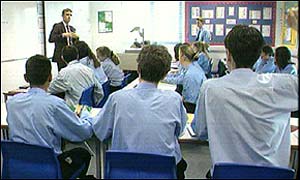 Grammar School which sowed how streaming can lead to the formation of anti-school subcultures. Paul Willis (1997) also researched the effects of streaming/banding in his book ‘Learning to Labour’.
Paul Willis’ study is still relevant today as there’s a persistence of counter school cultures in contemporary societies despite the ‘drying-up’ of manual labouring jobs. You only have to think of the number of NEETS and the increasing number of white working-class males failing school.
Paul Willis’ ‘Learning to Labour’ is a significant study for two reasons. Firstly his research followed a group of lads in the 1970s that rejected school and all its values and instead focused on leaving school as soon as they could.
In the meantime while they did attend school they spent most of their time trying to disrupt or avoid lessons or just generally messing about in order to shake themselves free of any control the school could impose on them.
Willis argued these lads had consciously developed an anti-school or counter school subculture. By being in a subculture the bottom-stream pupils can raise their self-esteem by gaining status in front of their peers.
Disrupting lessons, playing up to teachers and breaking as many rules as they can is their way of getting back at the system which has labelled them as failures.
The second important point with Willis’s work is it helps address some of the weakness in Marxist approaches to education. Althusser and Bowles and Ginitis argue schools prepare children for work, as if they’re docile beings simply doing as they’re told and being processed for the ‘long shadow of work’. Willis (a neo-Marxist) points out that these ‘lads’ consciously turn away from school and seek semi-skilled or unskilled work rather than being ‘forced’ into it as traditional Marxists suggest.
In contrast to the conventional sociological view of the time that saw the education system ‘failing’ working class youth, Willis argued that the lads he observed were deliberately failing themselves in recognition of the inevitable manual working future that awaited them. They were growing up in working class districts and knew no matter what teachers told them they would end up having working class jobs so with this fatalism in their minds they thought they might as well ‘enjoy’ school!
The book was ground breaking in its day because it was the first major educational study to link culture and social action to wider structural processes. While most sociological studies of the 1960s, 70s and 80s saw educational failures as passive victims of socialisation, social deprivation or unfavourable labelling by the school, Willis’ work painted a different picture of some working class children actively failing themselves by developing cultures of resistance in opposition to schooling.
Willis showed that the education system was failing to produce ideal compliant workers for the capitalist system. Rather the lads’ counter school culture contained some perceptive insights into the nature of capitalism for workers.
The lads recognise that there are no equal opportunities under capitalism and no matter how hard they work their chances of success remain far lower than those of the middle class pupils. They can see through the careers advice given at school and know that even if they were to work really hard the chances of getting a professional or desk job are very low.
There is a recognition that individual effort is likely to achieve little in terms of future prospects and a strong investment in a male working class peer group. Paul Willis argues there’s a persistence of counter school cultures in contemporary societies in spite of the drying up of manual labouring jobs you only have to think of the number of NEETS and the increasing number of white working-class males failing school.

Educational attainment in England is highly stratified by social class. There is an very strong relationship between family wealth and educational success, as well as family wealth and occupational outcomes, Becky Francis, 2016.
For some sociologists this stratification is evident in England’s secondary schools where students are grouped by ability.
Historically schools have used three distinct methods when deciding how a student will be taught. All three focus on student ability.
The most commonly used methods are: setting; streaming and mixed ability. Setting and streaming are often discussed as if they’re one and the same thing, but they’re not.
- setting is where pupils of similar ability are put in specific sets in specific subjects. So, for example, it would be possible to be in a top set for History and a lower set for mathematics.
- streaming/banding involves grouping students of similar ability for every subject studied. Most schools split pupils into several different hierarchical groups usually A, B, C, D, with A being the top stream. This meant an A streamed student would be in the A top stream for every subject
- mixed ability classes are where pupils of all abilities are in a single class
- mixed ability teaching started growing in popularity from the 1970s onwards
- By the early 1990s, a survey by authors of a study of comprehensive schools (Benn and Chitty) found that just over half of all schools were using mixed ability groups in all subjects
- the problem is in the early 1990s, Professor Eric Bolton, the former senior chief inspector of schools in England, said few teachers taught effectively in mixed ability classes
 When you meet someone for the first time I expect you assess what they’re wearing, how they speak and their general mannerisms in order to make your mind up about them. You’re effectively stereotyping them in the way they dress and speak etc.
It might surprise you to know that teachers do this. Teachers constantly judge and classify pupils as being bright, lazy, troublemakers, hardworking etc. This process of stereotyping a pupil from non-academic information can produce a ‘halo-effect’. The halo effect is when a pupil is stereotyped from first impressions as being good/bad or thick/bright. These impressions can shape future pupil teacher relations.
 Sociologists like Hargreaves found teachers initially evaluate pupils on a whole raft of non academic factors which label a student in a particular way. The problem is, once you’ve been labelled as either good or bad it’s hard to ‘peel off’ that label. The factors which create a label are as follows:
Does stereotyping affect attainment? Rosenthal and Jacobson (1968) found that it does. They found that when a randomly chosen group of school children were told by their teacher they were bright and would make good progress they did when compared to a group of children of similar ability. This showed labelling inaction. Rosenthal and Jacobson found if a student was given a positive label they acted that label out and visa versa. When a student acts out a label they’ve been given it’s known as the self-fulfilling prophecy.
The following presentation shows gives a step-by-step guide to what Rosenthal and Jacobson discovered about how the self-fulfilling prophecy occurs:
 sociologytwynham.com