
In 1997 the Labour Party returned to power with a large majority – the British Electoral Study explained how.
Below is an brief overview of their findings. Alternatively you can read their publication.
- Labour took advantage of the unpopularity of the Conservative Party
- Tony Blair had moved the Labour Party ideologically to the centre-ground while the Conservatives remained right-wing
- Class based voting had declined, especially as voters were becoming electoral ‘consumers’ and choosing more on issues/policy than ideology
- Also ethnic minorities were attracted to Labour as were female voters (feminist movement leans to the left)
The role of the media and its influence on voting behaviour is often in the headlines. In 2009 and more recently The Green Party has threatened legal action over the lack of comparable airtime.
In addition the politics of newspapers – results has become an ever increasing topic of discussion, with some commentators arguing media ownership undermines democracy especially media oligopoly.
Media influence on voting patterns has been of particular concern in relation to the role of newspapers especially that of the Sun in Tony Blair’s first election victory in 1997.
 However in 1992 when most commentators thought Labour were going to claim victory over the Conservatives the role of the media really hit the headlines. Following the Conservatives surprise victory The Sun’s head line read: ‘It was the Sun wot won it”. The Independent explains what happened.
Alternatively you can visit this page to view a chronology of several Sun ‘influential headlines. The question for sociologists is, do Marxists, pluralists or neo-Marxists best explain what’s occurred?
More recently in November 2013 the Sun’s headline took a clear swipe at David Cameron which could make Sun readers wonder  who they’re supposed to support.
While more recently the extent to which Murdoch is influencing the 2015 general election is evident in this article where Murdoch openly calls on Sun journalists to make life difficult for Ed Miliband.
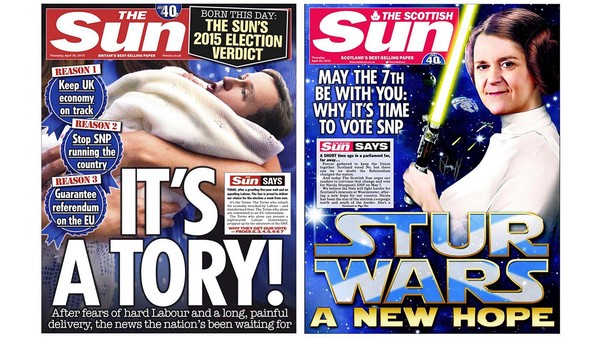
One the eve of the 2015 election things got worse with the Financial Times reporting how 7 daily titles called for a Conservative-led government, while just 2 supported Labour. The font pages below highlight the extent of the media’s partisanship.


Party images are the mental pictures that voters have of the political parties. As defined by Butler and Rose (1960: 17), ‘a party image is nothing more than a party as it appears to the public, the picture left by its surface characteristics’. These definitions are as broad as they are simple. As discussed below, there are numerous sources of party images and so the contents of these mental pictures could vary considerably across parties, across the electorate and across time.
Even an individual voter may well have a vague or inconsistent picture of a given party. Nonetheless, voters’ inclination to simplify their political thinking means that their images of parties will tend to be dominated by one or two key mental associations. And these associations are often persistent over time and shared by large proportions of the electorate. Such prominent associations are the core of a party’s image.
The notion of ‘party image’ has been shelved by most electoral researchers. This is partly just a matter of changing terminology. Many features of parties identified in later work as important influences over electoral choice could reasonably be described as aspects of image. It is also the result of class dealignment. Not surprisingly, given that many political parties arose out of social divisions, voters’ overriding image of a party is often its association with a particular social group. The relevant group will obviously depend not only the party but also on those social divisions that have been most prominent in a country’s politics.
Thus, for example, American voters’ images of their parties include associations with race and (increasingly) religion, in addition to the traditional differences in socioeconomic status between Democrats and Republicans (Brewer, 2009). In Britain, where all else was ‘embellishment and detail’ compared with the dominant class cleavage (Pulzer, 1967; Butler and Stokes, 1974), early studies of party image assessed how closely voters associated the Conservatives and Labour with their traditional class bases (e.g. Benney, Gray and Pear, 1956). A party’s image and its class image were treated as more or less synonymous.
The above extract has been taken from Robert Johns (2012), University of Essex.
Robert Johns
Sarlvik and Crewe (1983) position was the above factors were having a dramatic effect on voting patterns:
- They argued that partisan dealignment was occurring.
- Class dealignment was also occurring
- Class and partisan dealignment was precipitated by what Stuart Hall termed the Great Moving Right Show for Hall the shift to the political Right was orchestrated around a number of key areas as outcomes of anti-collectivist ideology. An anti-collectivist society differs to collectivist societies like those found in Scandinavia.
- Anti-collectivist societies introduce:
- Monetarism over Keynesian economics;
- anti-collectivism;
- raising falling educational standards;
- improving law and order;
- creation of scapegoats through the ‘enemy within’ – such as left-wing unions; law and order policies constructed around ethnicity
- use of right-wing press to advocate on Thatcher’s behalf
- and a realignment of the state by ‘rolling- back’ its involvement in big business and individuals – a contemporary example of privatisation is available for discussion here.
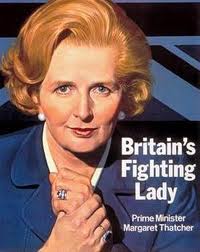
The following page explores the impact of how these were played out to the electorate with Mrs Thatcher encouraging the working-class to buy their own council houses, purchase shares (privatisation of nationalised industries) as well as drop their allegiance to trade-union membership (industrial relations)
- Sarlvick and Crewe also detected a change in voters’ habits. Instead of being historically aligned to particular party ideologies, the electorate were starting to vote on policies issues – what they termed policy preferences
During her time in office the influence of Mrs Thatcher was significance on the cultural and political identity of Britain, particularly through key policies on housing; privatisation; industrial relations.
However, Heath, Jowell and Curtice (1985) challenged Sarlivk and Crewe’s views on the weakening of voting on social-class lines by arguing class remained significant:
- Voters were choosing on the basis of ideological image of a party – a party’s image and its class image were treated as more or less synonymous.
- The Labour Party was losing support because its political image was too left-wing (this highlights the tension between party image and party policies
- The Liberal/SDP Alliance in 1980s was gaining support because its image was close to the values of the electorate.
- It’s worth noting how political image was becoming increasingly significant – Mrs Thatcher changed her image in late 1970s
Whatever the reasons the Conservatives remained in power from 1979 to the election of 1992, when many people saw John Major (leader of Conservatives, Mrs Thatcher having resigned in 1990) as vulnerable to Labour’s leader Neil Kinnock. Despite their concerns the Conservatives won.
The role of the media – in election results has become an ever increasing topic of discussion, particularly in relation to the role of newspapers particularly The Sun in Tony Blair’s first election victory in 1997. However arguably it was in 1992 when most commentators thought Labour were going to claim victory over the Conservatives that the role of the media really hit the headlines. Following the Conservatives surprise victory The Sun’s head line read: ‘It was the Sun wot won it”. The Independent explains what happened.
In 1997 the Labour Party returned to power with a large majority – the British Electoral Study explained how.
The Oxford English Dictionary defines nationalise as “to bring (land, property, an industry, etc) under state control or ownership”. Below is a short list of some of Britain’s nationalised industries operating during the 1970s. The following extract gives you an good overview about nationalisation.
While all the clips are interesting, the most ‘fun’ one to watch is the Top Gear clip showing the strengths of weaknesses of the British car industry (yes once-upon-a-time Britain had it’s own car industry). In contrast the British Rail clip is useful in understanding the tension between public service and making a commercial profit through private enterprise.
by Sam Cook a former student
In the early 1970s there were established and predictable patterns of voting as there was a clear ideological divide between the two 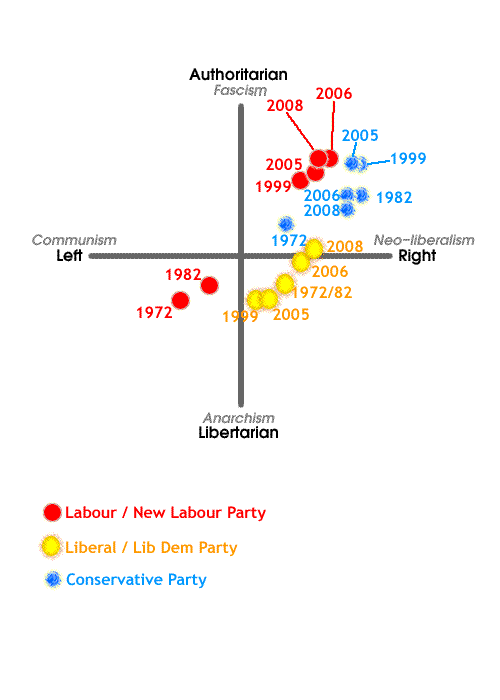 main parties Conservatives (Tories) and Labour. But you’re thinking 1970s, what was all that about? Well take a look here.
- Labour was seen as left-wing with collectivist ideology (ideas) – supporting nationalisation of UK industries; redistribution of income via higher taxation; strong state welfare spending; support for trade unionism
- The Conservative’s were seen as right-wing with anti-collectivist ideology (ideas) – supporting lower taxation; lower state spending on welfare and clear opposition to nationalised industries.
- (learn more about nationalisation and get a flavour of the 1970s and its influence on the way people voted)
Butler and Stokes (1974) perspective on voting, saw:
- Class (occupation) had a significant influence on voting – this is more evident when you examine the nationalisation page
- The majority of the electorate had a strong partisan alignment towards either Tory or Labour Party
- There were few floating voters
- The two-party system meant the electorate either voted Tory (if you were middle-class) or Labour (if you were working-class). Alternative parties never attracted a significant enough share of the vote)
- People were politically socialised by their parents
By the end of 1970s many of the above influences of voting habits were changing:
- The influence of class voting started to decline as a result of changing employment patterns particularly the decline in working-class manual jobs (Thatcher’s rise to power in 1979 saw her reduce the number of traditional jobs sustained by nationalisation)
- There was increasing evidence the electorate was switching their allegiances more often (evidence comes from the relatively high number of elections during 1970s)
- The Liberal Party was attracting more votes
- Electoral volatility was increasing. This was due to ‘winter of discontent’; unemployment remained high at 1.5m; Callaghan’s 5% wage restraint and finally Margret Thatcher changed her personal image as well as hiring Saatchi advertising agency who came up with famous ‘Labour isn’t Working’
Sarlvik and Crewe (1983) explained how the above factors were having a dramatic effect on voting patterns.
The following links take you to all the general election results from 1997 to 2010 (prior to this time the internet wasn’t really accessible to most people, indeed you only have to look at the BBC’s 1997 page to appreciate how fast things have developed)
General election 1997 – the 1997 election saw a massive swing to Labour, the reasons for this are available here.
General election 2010 – as you’ll notice in the data the electorate drifted away from Labour. In fact Labour lost 5m votes between 1997 and 2010. The reasons for this are explained here.
Hirst and Thompson (1996) are critical of Ohmae’s ideas. They argue for the need to differentiate between transnational and multinational corporations because there’s a distinction between a globalised and internationalised economy. Multinational businesses remain regulated by their home government while transnational corporations (TNCs) are globally based. Hirst and Thompson’s research found that multinational corporations (MNCs) dominate in a mainly international rather than global economy.
They argue most corporations are still based within national boundaries, generating money for the individual nation-state within which they operate with companies like BSkyB proclaiming they’re shutting down most of its off-share tax havens “Sky directly contributes more than £1 billion a year in tax – 40 per cent more than the average FTSE 100 company. We’re very proud of the significant – and growing – contribution we make to the British economy,” insisted the broadcaster.
This highlights Hirst and Thompson’s point that for MNCs the national base is very important and they are effectively regulated by their home government (the state they’re situated in) through regulatory measures like minimum-wage; business rates; health & safety regulations etc). Whereas as we previously saw TNCs are ‘footloose’ have international management teams and like Apple are willing to locate their headquarters anywhere in the world.
Hirst and Thompson admit that states have lost some power, but they still control their sovereign territory and regulate the population living within it therefore still retain their power. This is evident from minimum wage regulations and the power of the state to penalise those firms that flout such laws such as the Arcadia group who run Miss Selfridge and Topshop stores.
Giddens (1999) sits between Hirst and Ohmae by adopting a broader or shall we say moderate view of globalisation. For Giddens globalisation is a relational dynamic. Modern communication systems allow real-time experiences irrespective of the locality of such events. Giddens termed this time-space distanciation – where interaction isn’t dependent on the communicating parties need to be in the same location, just think of Skype. This idea can be applied to events in one country being discussed and influencing reactions in another location or country. This use of Sykpe was evident in the recent Arab Spring uprisings.
His emphasis on computer based global communication systems challenges Hirst and Thompson’s questioning of the existence of a global economic system by highlighting the breadth and depth of global financial markets. These global markets allow enormous sums of money to flow from one country to the next in seconds evading nation-state tax regimes.
Many sociologists now see the distribution of power as crossing transnational boundaries. Therefore globalisation is seen to weaken the power of nation states to control their own economies. In addition politics and political action  have become more globalised. Follow this link for an overview of this globalised world with the key features of globalisation listed here or watch this documentary on globalisation.
This position sees the model of power as something confined within the territorial boundaries of the nation-state as too limited. This point was clearly identified by Skocpol who argued state power is affected by the actions of other states.
According to Ohmae’s book ‘The End of the Nation State’, 1995, political borders will become increasingly insignificant. In the globalised world more and more economies are interlinked through the concentration of industrial and financial capital. Transnational companies are increasingly key players of an ever increasing international economy.
In a globalised economy there are clear limitations of nationally-centred multinationals with many global corporations having adapted themselves into ‘flexible transnationals’. No longer are companies divided between the operations in one country compared to another, instead they have ‘global products’. Such products universalises consumer sovereignty through ‘global information’ creating ‘global needs’ and subsequently ‘global commodities’.
Theodora Levitt argues the new reality is about ‘global markets’ whereby global corporations operate as if the entire world were a single entity. Transcending national differences global corporations work to treat the world as a single market.
For Ohmae individuals have become global citizens who want to buy the cheapest products no matter in the world where they’re produced. Primark is a good example of this mind-set. For the global consumer, global economic links are more important than national economies. On this basis national policies on the minimum wage are ineffective if firms move their business elsewhere for example Dyson as well as slave labour used in the prawn trade.
Ohmae argues companies no longer have any affiliation to the society they’re based in. It can be argued this is clearly evident with the UK corporation tax issue with Starbucks. This clip highlights how Apple’s company philosophy has pushed Ohmae’s point to its limit.
From the above Ohmae position is there’s now one economy, global in structure covering developed and developing societies.
- This inter-linked economy is co-ordinated by giant corporations with global brands like Apple
- Modern 24/7 communications via systems such as internet allow individuals to purchase goods from anywhere and anybody in the world. Just think of ebay.
- Governments can no longer tax, control, or influence such organisations as they can move money wherever, whenever they wish
- Consumers have more power than the state
However other sociologists argue states have more power than Ohmae recognises.
by Sam Cook a former student
What is the state and how do we define it? Attempts by philosophers to describe the state that was emerging are as much a part of the history of the state as are the political changes and legal innovations. Bodin, Hobbes, Spinoza, Locke, Montequieu, Hume, Rousseau, Madison, Kant, Bentham, Mill, Hegel, Tocqueville, and Marx were among the most insightful thinkers to offer theories of the state during the course of its evolution, with theorists developing their ideas into the 20th century like Max Weber.
Weber’s definition of the state is ‘a human community that claims the monopoly of the legitimate use of physical force with a given territory’. For the UK this legitimate force expands across England, Wales, Scotland and Northern Ireland although there is a degree of devolved power to Scotland, Ireland and Northern Ireland.
From Weber’s definition we can understand the state as comprised of government, civil service, the police and armed forces although some sociologists have sought to include welfare, education and health service into their definition. However most sociologists still see the government and the civil service as being the key institutions which constitute the state. The government’s own website provides an excellent insight into its composition while this Guardian article highlights the extent of the civil service.
The following page takes you to a discussion on what type of state do people want.
 sociologytwynham.com