
by Sam Cook
The British Sociological Association has a set of guidelines for ethical practice when conducting social research. Though these guidelines are voluntary any researcher has to submit a proposal about how they’re going to conduct their research in order to get funding. Many of the following points have to be considered:
- findings should be reported honestly and accurately
- the subjects researched must not come to any physical harm
- the participants should give their informed consent to being part of the research (while not giving too much away so the Hawthorne Effect compromises there research)
- confidentiality and privacy (anonymity) must be respected as the findings, when published, could have a major impact on the subjects
by Sam Cook
Valid social research data is research data which uncovers the truth to the extent the data is an ‘accurate reflection of social reality’ Haralambos and Holborn, 2000. As previously mentioned on the reliability page data can be valid without being reliable and visa versa.
For example closed questionnaires produce reliable quantitative data but the validity of the data can be questioned for example because the respondent lied when completing a survey or because the questionnaire didn’t have a desired category for the respondent.
by Sam Cook a former student
Three types of schools were established by 1944 Education Act – grammar schools; technical schools and secondary modern schools.
The basis of having three types of schools came from the idea a child’s ability was fixed by the age of 11 and was unlikely to develop and so an 11 + intelligence test was designed to select which school children would attend. The test was generally sat in sometime in the final year of a child’s primary education (now known as year 6).
Depending on 11+ test result a child would be sent to one of the three schools above in preparation for the type of occupation best suited for them as adults. This process was fraught with several problems discussed in more detail on this page.
For a less detailed look at positivism go here.
The French philosopher Auguste Comte grew up in the radicalism of the years following the French Revolution. The turmoil of those years prompted him to think of a rational (scientific) way of planning society so as to avoid any future turmoil. His work entitled ‘Plan of the Scientific Works Necessary for the Re-organisation of Society’ (1822) is seen as coining the term sociology through the application of sociological positivism.
Positivism claims to construct scientific theories from information (data) gathered from researching society. In this way Comte saw sociology as a new science because just as there are causes of things in the natural world (e.g gravity makes objects fall to the ground) there are forces in society which influence individual behaviour (the turmoil Comete witnessed in the French Revolution).
Emile Durkheim, also a positivist, called the external forces acting on people social facts. He said it was the job of sciologists, through social research, to study and measure the influence of these social facts.
For Durkheim, social facts are to sociologists what gravity is to a scientist. In the same way scientists have to use instruments to measure gravity, it is the job of the sociologist to come up with ways of measuring social facts (Durkheim said social facts should be considered as things which live outside the individual – like gravity). An example of a social fact influencing people’s behaviour is social-class. Social-class though an abstract idea, like gravity, can been seen to influence people’s behaviour. For example in the same way gravity might limit your ability to fly might your social-class have any influence on your ability to succeed in life.
In order to measure the extent social-class might determine a person’s ability to succeed some sociologists use postitvist research methods to measure or quantify the influence of social-class. Research methods which objectively measure data are known as quantitative methods, these include:
- the experiment
- the comparative method
- social surveys
- structured questionnaires
- formal/structured interviews
- non-participant observation
Positivism assumes general laws about society could be gathered from conducting objective quantitative research, using any of the above methods (which method you choose is examined here). The assumption here is individual motivations can be studied and predicted in the same way a scientific methods predict the temperature at which water boils. Interpretivists challenge this assumption.
by Sam Cook
Some sociologists conduct observational research without participating in the activity being studied in order to reduce the risk of those being observed will be affected by the presence of the researcher. An example of covert non-participant observation is – ‘The survival time of chocolates on hospital wards: covert observational study.’
This process also avoids the Hawthorne Effect, though to achieve this the observer has to conduct their research in a manner which prevents the participants knowing they are being researched for example by a hidden camera (though this does raise ethical issues).
participant observation by Sam Cook
When conducting participant observation the researcher can either observe covertly or overtly.
Overt observation is where the researcher will disclose themselves to the the participants so they know they’re being observed.
Covert observation is where those being observed are unaware they are being observed (the researcher’s undercover – ‘gone native’); this usually involves the researcher assuming a false identity for example if you were researching the behaviour of football supporter you’d pretend you were a supporter so you could conduct the research.
A famous example was John Howard Griffin who dyed his skin black and lived as a black man in the southern states of America in 1960.
Advantages
- you have high validity doesn’t disturb the normal behaviour of the group – no risk of the Hawthorne effect
- no prior knowledge of social dynamic being observed is required
- allows the observer to dig deeper into groups/individual behaviour
- research can be sustained over a long period of time giving greater depth
Disadvantages
- ethical issues just by participating in criminal activity
- ethical issues if covertly witnessing criminal activity
- tend to be small scale and the group being studied might not be typical
- the researcher may be exposed to danger for example if participating in criminal activity
- if the identity of researcher is uncovered the whole research could be ruined
- the participants may feel betrayed and used if/when they find out their activities were being recorded and could take out revenge
- difficult to record observations without being found out
- difficult to leave the group having been a part of the group for so long
- difficult to remain covert for long periods of time
Positivists question the reliability of participant observation because they are difficult to replicate and so check the validity of any findings.
by Sam Cook
Advantages
- There is less of a problem with interviewer bias than unstructured (open interviews) as there’s less involvement of the interviewer
- As they usually have pre-planned (pre-coded) questions it’s relatively easy to put the data gathered into statistical forms such as graphs (positivist in nature)
- As the questions are pre-coded the data gathered is often seen as more reliable as all respondents are answering the same questions which makes it easier to replicate the process by other interviewers
- They’re generally seen as more effective way of getting questionnaires completed particularly postal questionnaires which have a high non-response rate particularly as it overcomes the problems of illiteracy
Disadvantages
- Their pre-coded structure means it puts limits on what respondents can say a) which means the interviewer can’t probe the respondent beyond what the set questions b) these limitations mean it’s difficult for the interviewer to gain understanding (verstehen) of what the respondents means
- Although the in the advantage is seen to be the lack of interviewer bias, there is still remains a possibility of interviewer bias caused by non-verbal cues such as frowning
- In relation to postal questionnaires and questionnaires, interviews are more costly (interviewers have to be paid and the interview process is much slower) than either postal questionnaires or questionnaires
by Sam Cook
by Sam Cook
Advantages
- Often a good deal of rapport develops between interviewer and interviewee allowing a detailed and honest information to be obtained. This is very useful where the subject being researched might be particularly sensitive
- It allows the respondent (interviewee) to speak for themselves so the researcher can gain a better understanding (verstehen) of the topic being discussed
- The interviewer can easily develop points raised by the respondent to gain an even deeper meaning by exploring the meanings and motivations behind a particular action or event
Disadvantages
- The success of the interview often depends on the quality and skills of the interviewer
- The interview itself can be very time consuming and playing back what’s been recorded is also very time consuming which means fewer interviews take place meaning samples tend to be small
- As the interviews are open, the lack of non-standardised questions make generalisations and the production of statistics difficult
- There’s a good chance of interviewer bias: a) The interviewer could give non-verbal cues such as smiling which could influence an interviewee’s response b) The interviewer may only follow up leads in the interview they deem important, which could contradict what the respondent feels as important
- The fact you ask questions about something sometimes affects the dynamic of the interview to the extent the respondent changes their behaviour
For Bowles and Gintis it is the need of the capitalist economy rather than the needs of students which drives the education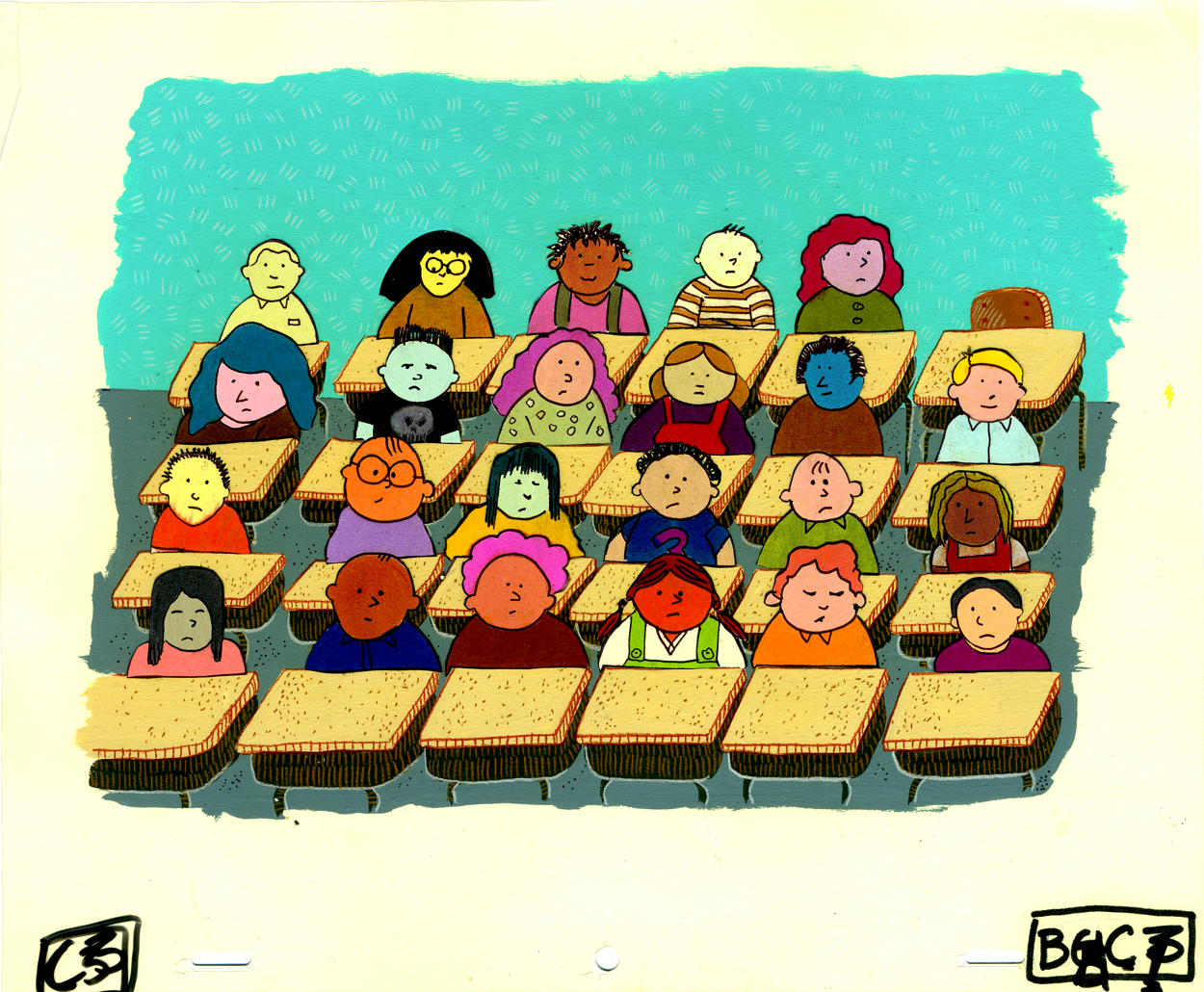 system in the UK. The education system is constructed on unequal relations of authority between the pupil and the school.
Bowles and Gintis show how this unequal relationship corresponds with that of the workplace – the boss and his staff. Therefore school simply teaches young people (via hidden curriculum) to accept social inequalities in the workplace by schools ‘teaching’ :
- students to accept authority by having to follow school rules without question – as you have to at work
- students to accept the norms and values of the workplace – poor attendance and lateness is punished as it would be at work
- students are taught the importance of looking smart – you’re punished for wearing trainers to school or sent home if you’re skirt is too short – as is likely in some jobs
- students are given external rewards such as house-points – school work like the workplace is dull and repetitive so external rewards keep employees motivated
 sociologytwynham.com