Feminist writers have had a lot more influence on the family than any other perspective. Feminist perspectives tend to be either Marxist feminist or radical feminists.
Marxist feminists emphasise how capitalism uses the family oppresses women, and the harmful consequences of the family to women’s lives.
Task – Using your understanding from the previous lesson, create a diagram which explains why Marxist feminists blame capitalism?
In contrast, radical feminists emphasise patriarchy as the main barrier to women’s freedom. The following film clip best symbolises the frustrations felt by feminists regarding family life.
- But before feminism came to the fore in the 1960s what was the women’s role at home? Watch the following clip and try and identify five key things women were responsible for within the home and then five areas men were responsible for.
Your responses show how patriarchy is both overt and covert. Overt is where men deliberately limit or oppress the lives of women in extremely visible ways for example making them stay at home and care for the children. In contrast covert patriarchy is where men mange to control the lives of women in less visible ways.
Now watch the second film and try and identify as many covert ways patriarchy is at work.
Look at the list you made/notes taken. Using the evidence in the film do men control women through overt or covert ways? Or maybe you think it is a combination of both overt and covert control? Now consider the diverse ways men manage to control the lives of women today without using any overt force. Try and identify the possible mechanism men use to control the lives of women? Radical feminists would argue that patriarchy is an ideology and men use ideology to control the lives of women (ideology is a set of shared beliefs or values which are used by powerful people).
Though the Radical and Marxist feminist perspectives have differing starting points they both agree that women are oppressed by men to the extent that some women no longer seek marriage. Follow this link to read about what some contemporary women are choosing to do: Though this might seem extreme for some feminists they all agree that women are oppressed due to the following reasons:
Margaret Benston (1972) argued that capitalism benefits from a large army of women – an unpaid workforce- who are compliant and willing to do as they’re told because women have been socialised to act this way and women rears future workers to think the same way
Delphy & Leonard (1992) argue all the unpaid housework and childcare is done by women. Women also make the largest contribution to family life, while men contribute the least but gain the most!
Emotional labour
Benston also argues that as her role as a housewife the woman attends to her husband’s emotional needs, and this keeps him, the man, in good running order to perform his role in supplying effective waged labour.
Delphy & Leonard (1992) – the inequalities in domestic labour continue with wives often flattering, understanding and praising their husbands achievements but men rarely reciprocate. They also found women provide trouble free sex which is important as men best unwind post-coitally.
Ann Oakley pointed out in the 1970s that housework is tough, demanding and unrewarding, and men are the ones who gain most from this free labour.
Economic dependency
Married women become economically dependent on their husbands especially as once children arrive women give up work in order to look after the children and even when mothers do return to work it’s usually part-time rather than full-time employment
Male domination
Feminists see the family as male dominated as men are the bread-winners and tend to make all the key financial decisions. Indeed some men use force to get their way. Feminists have stressed the significant amount of domestic violence used by men to their own way in the family.
Criticisms
Functionalists and even the New Right would argue that feminists put too much emphasis on the negative side of family life because it ignores the possibility that women enjoy running the home, raising children and being married
Also it ignores Wilmot and Young’s ideas on the symmetrical family, and how there’s greater equalities in family life with shared conjugal roles
Task – identify the key points surrounding Wilmot and Young’s ideas about the symmetrical family
Essay Task – Examine the differences between Marxist, Feminist and Functionalist views of the family. Please note this is an essay which will need to be at least 600 words in length. In your essay you must include all the words listed in this document assignment-words
Next lesson
Functionalists see society as similar to a human body. Each part of the human body relies on different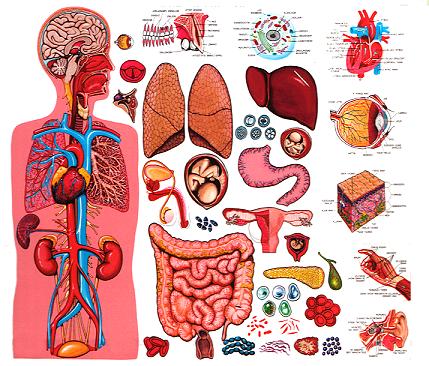 organs in order to function correctly. According to functionalists society operates in exactly the same way because it relies on different social institutions (family, school, and government) working together to keep the social body working properly.
In contrast Marxists see society as operating solely to make a profit for the ruling class. We the proletariat are socially engineered to conform to the needs of a ruling class who benefit the most from societies using a capitalist economic system. Therefore schools and the family exist solely to provide a compliant labour force who will willingly serve the needs of capitalism.
On the other hand feminists see society as operating in order to meet the needs and wishes of men (patriarchy). Patriarchal societies are engineered to meet the desires and needs of men through institutions like the family and the education system. On this basis feminists say women are second-class citizens.
However For Parsons (1951) the function of the family has changed and now only has two basic functions of :
-
primary socialisation of children
- stabilisation of adult personalities
Primary socialisation is the socialisation which occurs during the early years of childhood. During the process of socialisation a child’s personality is moulded so that the core values of the society it’s immersed in become part of that child. Parsons argued families act like factories with the processes and systems available to it to continually ‘reproduce human personalities’ in a warm secure environment.
Stabilisation of adult personalities emphasises the emotional security found within marital relationships This acts to balance out the stresses and strains of everyday life faced by most adults. In addition the function of the family is to allow adults to ‘act out’ the ‘childish’ dimension of their personality by playing with their children, using their toys etc.
The stabilisation of adult personalities is also aided by the sexual division of labour within particularly as the family is an isolated nuclear unit. Within the isolated nuclear family members are allocated particular roles (role allocation) in order for it function correctly. The sexual division of labour achieves these ends. By identifying two distinct roles for the husband and wife within the family this structure stabilises family members allowing the family to function.
For Parsons’ women’s role in the family is an ‘expressive role’. What he meant by this is a woman’s familial role is to provide care, love, affection, security and all the necessary emotional support a family member might need.
In contrast for Parsons’ men have an ‘instrumental role’ as the bread winner. Such a role is very arduous and is such a stressful, anxious challenge that it can cause men to breakdown. Therefore a woman’s function is to relieve this burden or tension from the men’s shoulders by providing love and understanding as well as continuing to be the primary carer irrespective of their own circumstances.
Therefore the sexual division of labour is about men and women having ‘expressive’ and ‘instrumental’ roles in the family so that it functions correctly.
The best way to understand Parson’s view is to imagine living in the ideal family as similar to entering a warm bath. Indeed it’s useful to understand Parson’s view of family life as being a ‘warm bath theory.
As industrialisation grew kinship-based society broke-up which had a direct impact on family structures. Out went the classic extended family and in came the ‘isolated nuclear family’ as a ‘productive unit’.
The termed ‘isolated’ comes from functionalist Talcott Parsons who identified the families in modern industrial society as being isolated nuclear families because they’re no longer connected to wider kinship relations.
Criticisms of Murdock and Parsons
Test your knowledge of this section test-knowledge-3
One of the key problems of moving from AS to A2 is recognising the need to analyse at a greater depth than you are used to. Remember to think orange
For example is you were to examine the role of material factors in attainment at school you would tend to write in the following analytical way – flow-chart-as-analysis
To write in such a way seemed a challenge at AS. However the challenge is even greater at A2 as you have to incorporate key sociological concepts in order to show your intellectual abilities. In your A2 exams there are no trigger words telling you to analyse you just have to do it naturally.
This is an intellectual leap similar to the one in the youtube clip below. Watch the clip, it’s world famous and is analogous to the great leap forward you’re expected to make.
Yes you have to realise that your concepts are scattered around like redundant bones. The trick is to pick up these words and use them in a way you’ve never considered before! Like this and remember to think oranges!!!!!…….flow-chart-a2-analysis
Once you’ve ‘seen’ this you can progress to the ‘real’ A2 level of analysis evident on this page flow-chart-a2-analysis-plus . As well as applying concepts you integrate them with social theory!!! (Marxism; neo-Marxism; Functionalism; Symbolic Interactionism; Feminism)
Or maybe you prefer the brick-laying, mortar analogy

For those of you conducting your A2 coursework project on material factors and attainment at school take a moment to read through the following document.
It looks at the relationship between income and brain development.
It’s an academic article but accessible nonetheless. More importantly for you guy’s it’s not a long document!!
Follow this link to see the relationship between income and attainment at A Level
It’s on the following link martha-farah-poverty-and-brain-power

The popularity of the cereal packet family is mainly due to the fact that the nuclear family is seen as being the way families ought to be.
This is because the image of the cereal packet family is transmitted by journalists who tend to be white middle-class people; and so the family scenarios in adverts tend to be very middle-class. Families out together, families eating together, families on holiday together even your doctor is often described as a ‘family doctor’.
When everyone is in agreement over something this is known as an ideology. An ideology is the transmission of an idea from one group of people to another. A dominat ideology is a value or idea which is shared by the majority.
So if everyone thinks the nuclear family is an ideal family and how things ought to be, to the extent it becomes a typical family, then it’s an ideology!
Next lesson
Is the cereal packet family the dominant family form in Britain today?
The answer to such a question can only be answered through looking at official data. Governments regularly collect data in order that they can see the trends in UK family life.
Using the data shown in Figure 1, 2 and 3 below answer the following questions:
- What is tends are evident in Fig 1?
- What trend is evident between 1971 and 2002 in Fig 2?
- What was the most significant trend between 1971 and 1998, again in Fig 2?
- Look at graph Fig 3 and describe the trends evident in the data?
- Using the answers to the above questions comment on the usefulness of the cereal packet family and why the ‘cereal packet’ imagine is still popular with advertisers.
Fig 1
|
A summary of changes over time |
 |

Percentage of single, divorced and separated women aged 18 to 49 cohabiting by legal marital status: Great Britain, 1979 to 2002 http://www.statistics.gov.uk/cci/nugget.asp?id=824
Fig 2
|
A summary of changes over time |
|
 Mean household size, Great Britain, 1971 to 2002 |
Between 1971 and 1991 there was a decline in the average size of household in Great Britain, from 2.91 persons to 2.48. It continued to decline though at a slower rate throughout the next decade, falling to 2.32 by 1998. Since then it has remained fairly constant. In 2002 the average number of persons per household was 2.31.
Since 1971 there have also been changes in the composition of households. In particular, these have included an increase in the proportion of one-person households, and of households headed by a lone parent.
Between 1971 and 1998, the overall proportion of one-person households almost doubled from 17 per cent to 31 per cent, and the proportion of households consisting of one person aged 16 to 59 tripled from 5 per cent to 15 per cent.
Over the last five years there have been no statistically significant changes in the overall proportion of adults living in one-person households, and among people aged 65 and over the proportion living alone has remained relatively stable since the mid-1980s.

The proportion of households containing a married or cohabiting couple with dependent children declined from just under one third of all households (31 per cent) in 1979 to just over one fifth (21 per cent) in 2002.
By comparison, the proportion of households with dependent children headed by a lone parent rose from 4 per cent of all households in 1979 to 7 per cent in 1993. It has remained relatively constant since then.
 |
|
|
|
|
A summary of changes over time |
|
 Families with dependent children by family type: Great Britain, 1971 to 2002 |
As well as measuring changes in the composition of households, the GHS also provides information about the composition of families. The two measures have followed similar trends over time.
There has been a decline in the proportion of families headed by a married or cohabiting couple and a corresponding increase in the proportion headed by a lone parent. In 2002 73 per cent of families in Great Britain consisted of a married or cohabiting couple and their dependent children. This is a proportion that has declined steadily since 1971, when 92 per cent of families were of this type.
The large growth in the proportion of lone-parent families (from 8 per cent of families in 1971 to over a quarter of families [27 percent] in 2002) has mainly been among families headed by a lone mother. Lone-father families have accounted for 1 to 3 per cent of families since 1971, whereas the percentage of lone-mother families has risen from 7 in 1971 to 24 per cent in 2002.
The percentage of families headed by mothers who have never married (i.e. single) has risen from 1 in 1971 to 12 per cent in 2002. The percentage of families headed by mothers who were previously married, and are now divorced, widowed or separated, has risen from 6 to 12 per cent during the same period.
|
|
|
|
Next lesson
In 1967 Edmund Leach recognised the power of the image of the traditional family. Leech called this image the ‘cereal packet image of the family’ because it was a socially constructed model laden with assumptions of how families ought to be. Such an image creates a normalised social construction of what a family should look like.
Ann Oakley (1982) described the cereal packet image of the family as one in which ‘conventional families are nuclear families composed of legally married couples, voluntarily choosing the parenthood of one or more (but not too many) children. While Feminist Barrie Thorne (1992) attacked this image for being ‘monolithic’ as it ignores diversity in family structures.
The above argument are seen throughout the advertising industry. Adverts tends to use the ‘cereal packet’ family as a stereotypical image which best describes family life in Britain today. Using Oakley’s definitions, we can recognise that a cereal packet family ‘has’ to meet the following criteria:
-
be a nuclear family living with one or two of their natural dependent children.
- the couple is seen to be married (excludes single parent and cohabiting families)
- the couple is heterosexual (therefore no same sex couples)
- dad’s the breadwinner and mum stays at home to look after the housework/children. She might also have a part-time job in order to bring that little extra home
If you watch the clip below you can see if the points above are evident in the advert.
But how true is all the above in 2013? Has the growth in family diversity (single-parent families, same-sex couples etc.) changed the image (therefore is the discourse changing) of the cereal packet family from the traditional nuclear image to a more diverse image? You can make up your own mind by watching the two adverts below.
 When writing your crime essays please get into the habit of making references to academics who have written about the area you are writing about.
To do this please refer to the following document which is full of references quotations
Cloward and Ohlin provide other explanations for working class delinquency. Cohen could not explain why delinquent subcultures take different forms, for example some are mainly concerned with theft while others focus on violence. Cloward and Ohlin identify 3 types of delinquent subculture. The first is criminal subculture. It tends to develop in areas where an illegitimate opportunity structure is present. Adolescents use crime for material gain. Adult criminals teach the youths the tricks of the trade.’ There is conflict subculture, which tends to develop in areas where an illegitimate opportunity structure is absent. Delinquents often form conflicting gangs out of frustration at the lack of available opportunity structures. Finally there is the retreatist subculture, which emerges among those who have failed to succeed either by legitimate means or by being part of a criminal or conflict subculture. They tend to retreat to drug and alcohol abuse.
 Cloward and Ohlin’s theory is good in that it shows that working class delinquency is not just concerned with material gain. The theory also identifies and explains a number of different subcultures. However, Cloward and Ohlin fail to realise that the different subcultures can overlap. For example gangs involved in conflict subculture often deal in drugs, and make large sums of money in the process.
According to Walter Miller, lower class subcultures have a number of focal concerns. They are:- fate, excitement, autonomy, smartness, trouble and toughness. Lower class delinquency results from young men acting out the concerns of lower-class subculture. In doing this, they often break the law. Miller argues the norms and values of the lower classes are different from the mainstream ones, and they are more likely to lead to crime. For example, one of the focal concerns is autonomy. The lower classes believe in freedom and independence, and do not like being told what to do. This may bring them into conflict with authority figures, such as police. The focal concerns theory has been criticised. Miller pictures lower class subculture as a distinctive tradition, many centuries old.’ It assumes all lower class males are seen to act out this subculture with little reference to mainstream society. While a lower class subculture may exist, it can’t be true that all working class males have norms and values that are all different from mainstream ones. For example, not all working class boys want to fail in education.
There are other explanations for crime an deviance, such as David Matza’s techniques of neutralisation,’ theory. According to Matza, many express guilt and shame for their delinquent actions, and they hold at least some mainstream values. Nevertheless, they still commit crime because they believe it is justified. Neutralization is defined as a technique, which allows the person to rationalize or justify a criminal act. There are five techniques of neutralization; denial of responsibility, denial of injury, denial of victim, condemnation of the condemners, and the appeal to higher loyalties. To explain one of these, denial of injury is the belief that the crime was justified because no one was really hurt, for example, stealing from those who could afford it.

Matza also argues that delinquent behaviour is often directed by subterranean values which are found throughout society. These underground values,’ are only expressed in particular situations. They include an emphasis on excitement and toughness. In mainstream they may be expressed through competitive sports, for example on the football field. But, delinquents may express their underground values in a criminal way.
Subcultural theory suggests that many young males are committed to a distinctive subculture and a deviant lifestyle. Matza is against this view. He argues that many men drift in and out of delinquency. Their delinquent acts are casual and intermittent rather than a way of life. This seems to tie in well with the fact that most young people stop committing deviant acts as they get older. In general Matza sees the delinquent as being little different to other young people.
Matza’s theories are good in that they answer the criticisms of subcultural theory. Delinquents are no longer seen as prisoners of the social system directed by their position in the social structure. Also, according to Downes and Rock, (2003) Matza’s view describes the criminal behaviour of many young men in Britain. The most frequent reason they give for their delinquency is boredom; and delinquency offers plenty of opportunity for risk and excitement to relieve boredom.
In conclusion, I would say that I am more convinced by the Marxist perspective in general than the functionalist one. Marxist says that it class struggle that leads to crime. This approach is successful in explaining many of the crimes committed by the working classes. For example someone who is working class who feels oppressed by the capitalist system may try to steal the car of someone who is wealthier or break into their house. They may even commit non-utilitarian crimes such as vandalism as an expression of their frustration at the system.
For a little more information on this go to http://en.wikipedia.org/wiki/Subcultural_theory
 sociologytwynham.com