Politicians of all parties are recognising that family diversity is here to stay. The traditional nuclear family might be seen by many politicians as ideal, nevertheless it’s difficult to go backwards, especially as a new generation of children have been brought up living in these diverse family forms.

However the Conservative leader David Cameron recently argued the following:
- Children need a stable family background
- The evidence shows that a married family is less likely to break up than a cohabiting one
- All social problems can be traced back to the family
- Therefore it is sensible that governments support the married family through social policies such as income tax breaks as well as additional benefit
- What is David Cameron saying about families in the above policies?
We can see the Conservative social policies are built around the married family. In contrast the previous evidence shows that Labour policies focus on children within families.
- Why might Labour social policies focus on children?
This is so Labour don’t penalise different diverse family forms. Any discrimination of lone parents or cohabiting couples would go against their previous policies discussed above.
Next lesson
All social policies are implemented by governments. Governments are elected to run the country by the electorate who choose the political party they want to run the country. The two most prominent political parties in the UK are the Conservative and Labour parties. When in power governments create policies which affect the well-being of its citizens. Policies which have a clear effect on our well being are known as social policies.
Social polices are those which influence social security, health, education, social care etc. For example a recent educational social policy is the raising of the school leaving age to 18. An example of a social policy affecting the family is the lowering of working families tax credit thresholds.
 So let’s look at Conservative social policies:
Conservative policies has had a history of being very supportive of the traditional nuclear family. Indeed the Conservatives were the party which introduced New Right thinking into UK politics in the 1980s.
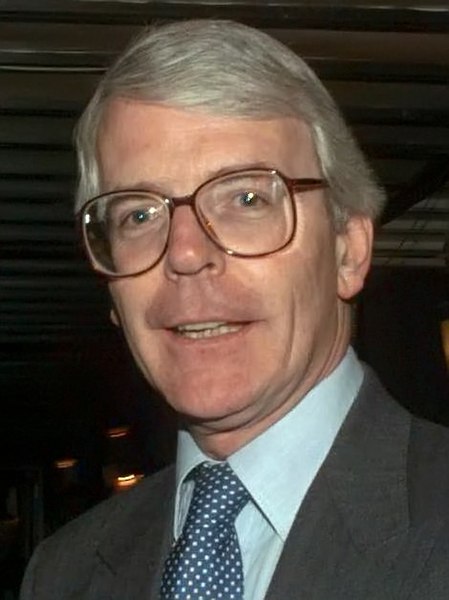
In the 1990s the Conservative Party under John Major (1990-1997) showed a very keen preference for the married, two-parent nuclear family which was evident in his Back-to-Basics campaign.
His campaign brought in two key pieces of legislation. The Child Support Agency and the Family Law Act of 1996
- Identify the key principles of the above two legislative changes
The main aim of the CSA was to make absent fathers pay to support their children even after a relationship had failed. By making absent fathers pay the financial burden on the state would be reduced as the money received from fathers would reduce the state’s payment to lone mothers.
The Family Law Act introduced a one year waiting period before a couple could divorce with the idea that over this time period a marriage could be saved. However the act was never introduced as judges saw it as unworkable.
- So how do Conservative policies shape the family? If you read this BBC article it explains David Cameron’s approach to social policy prior to his election in 2010
 So now let’s take a look at Labour social policies:
New Labour under Tony Blair came to power in 1997 and sought to adopt a more relaxed approach to the family than the Conservatives. Though they didn’t seek a Back-to-Basics policy like the Conservatives, they tended to be keener in recognising family diversity. This was evident in their Supporting Families (1998) consultation paper which centred around supporting families rather then telling people what their family should look like. This approach recognised family diversity.
This social policy was one of support for all families not matter what their form. The Labour Government policy was one of NOT interfering in family life and recognises that many lone parents and unmarried couples raise children successfully. But at the same time New Labour stressed that ‘marriage is still the surest foundation for raising children’.
The above describes Labour rhetoric but what were their actual social policies for the family. It’s important to note that Labour have been in power since 1997.
What do imagine Labour policies were towards families? It’s important to recognise that historically Labour values were VERY different to Conservative policies but this no longer seems the case.
In 2001 Labour introduced its New Deal programme. This scheme is designed to help people into work. One area of the New Deal programme was particularly aimed at lone parents (which tends to be women). Since April 01 all mothers have to attend an annual interview about job opportunities. This operates in conjunction with Working Family Tax Credits, which top-up low wages.
They also created Sure Start programmes which deliver support for low-income families with young children. And as recently as October 08 they introduced the Child Maintenance Enforcement Commission to supersede the CSA. Read more on this important change here
As you can see Labour family policies focus on parental responsibility to find work. Yet Labour do argue Child Benefit has increased 26% in real terms between 1997-2001 however the number of children living in poor families has increased to 3.8m in 2007.
- So how do Labour policies shape the family?
As was saw in the previous page, lone-parent families are particularly vulnerable to having a low family income. Therefore over recent years numerous government policies have been designed to help everyone live in a stable family. To this end, it’ll be useful if you watch the Jeremy Kyle clip below and decide which social policies you might introduce (in any) to solve any likely social problems.
To this end successive governments have sought to construct social policies which strengthened the traditional family by providing a range of social policies designed to support the family.
Traditionally Conservatives have supported the nuclear family while Labour has steered towards family diversity. However there’s been a distinct blurring of these boundaries with David Cameron’s Conservative party recognising family diversity while at the same time discussing the need for tax breaks for married couples. Then in 2013 the Conservative Party’s Autumn Statement offered tax breaks for married couples.
New Right thinking is still in existence and continues to promote the nuclear family as the best form of family. On this basis every other family is stratified beneath the nuclear family and on this basis all their social policies are built on the nuclear family.
Therefore all taxes and welfare benefits would be designed to favour nuclear families. For example the income tax threshold (the threshold is the amount of money you could earn before a couple paid income tax) would be raised for married couples (this used to be in existence, known as the married couples’ allowance.
Another example for would be for working family tax credits, child benefit only to be paid to married couples. According to New Right thinking this would encourage more people to get married!
For the New Right, paying welfare benefits to diverse family forms has the effect of encouraging all types of other families to become acceptable. Cohabitation should be discouraged possibly through the taxation system or by restricting legal rights and privileges to cohabiting couples. Divorce should also be made more difficult through the legal system.
- Before we look at this in some detail have a think yourself and decide where these ideas are vulnerable
Blaming
The New Right tends to blame victims for things that are not of their own making. Many of the problems identified come from low wages, lack of employment opportunities as well as cultural changes which are endemic rather than unique to an underclass. For example many celebrities are single parents, cohabit, divorce or have affairs.
Idealistic
Is the New Right spending too much time looking to the past for a golden age which never really existed? Victorian times were seen as the ideal, but even then lone parenting, cohabitation and extra-marital relations were common
The problem for the New Right is their reliance on an ideal type of family stratifies all other families beneath the nuclear family. Why are families without fathers inferior? Isn’t family diversity normal?
- Think back and identify as many diverse family forms as you can!
The causes and outcomes
The answers to the points raised in the previous lesson are (from a New Right perspective!!!):
- Lone-parenting causes a breakdown of traditional family values by saying other types of families are just as valid as the traditional nuclear family
- Fatherless families causes over-generous welfare payments to single mothers which means fathers are left off their responsibilities to their children
- Increasing divorce rates has been brought about by the rise in feminism which has devalued marriage, domesticity, childrearing, and has caused women to seek fulfilment outside the home, such as the workplace
- Cohabitation has caused an increase in permissiveness and erosion in loyalty
- The increasing tolerance of gay and lesbian couples has eroded the value of heterosexual marriage
- What are the consequences of all the above for the family? Try and answer this question, to help think about functionalist views of the family! And this comedy sketch might help you!
Consequences
The consequences for the family from the above is ‘fragmented families’ can no longer function properly for example effective socialisation is impossible. This means children fail to perform at school and are generally anti-social, resulting in more criminal activity. Many New Right thinkers argue that poor socialisation stems from absent fathers. Families without fathers mean many youngsters, particularly boys, lack male role models, particularly when it comes to discipline. Therefore families no longer function in an effective way which causes numerous social problems.
Solutions
The New Right proposed to key solutions to the problem of the underclass. First a return to traditional family values, which means marriage for life and recognition of the duties and responsibilities of adults have when bringing children into the world. Secondly a change in government policy so that welfare payments would be designed to support the nuclear family and penalise those families which failed to live up to this ideal
Next lesson here

The sociological concept of underclass is a relatively new. As group the underclass are those people who due to lack of employment, skills, income, wealth or property appear to stand outside ordinary society.
It can be argued the underclass are those who have become surplus to a globalised economy because production can be moved anywhere in the world where unskilled labour is cheapest.
American Sociologist Charles Murray (new right theorist) who viewed ‘excessive’ state welfare payments as creating a dependency culture who don’t want to work and there’s your underclass. For Murray social welfare (social security as it was once known) started out as a safety-net for people when hit with hard-time, but has become hijacked by a group of people with no intention of working.
Charles Murray visited the UK in 1989 and said it has a developing underclass.
Murray said: “the underclass are defined by their behaviour. Their homes are littered and unkempt. The men in the family are unable to hold down a job. Drunkenness is common. The children grew up ill-schooled and ill-behaved and contribute to a disproportionate share of juvenile delinquents”
Murray saw underclass as behaviour a lifestyle choice, a disease which infects people who share many of the following characteristics (female headed lone parents, out-of-wedlock-births, school drop-outs, violent and criminal).
Much of these characteristics are evident in newspaper reports – Daily Mail.
The New Right are a group of thinkers who believe the family is the cornerstone of all social policies. They came to the fore in the 1980s when Mrs Thatcher was in power. Mrs Thatcher and many Conservative politicians said poor behaviour by young people in schools, on the streets, etc was down to coming from a poor family background.
New Right thinkers saw the nuclear family as the perfect model of how all families should be, and some politici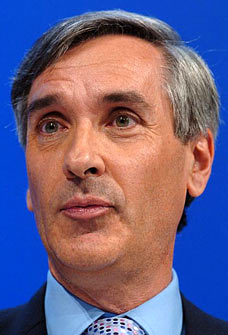 ans like John Redwood were especially critical of young single-mothers. Redwood expressed concern about the cost of welfare payments to single-parent families and these payments encouraged single-parenthood and the subsequent creation of an underclass.
Single-parenthood was seen as the greatest threat to the nuclear family. Indeed the Conservatives at the time created a moral panic about lone mothers and their threat to society.
However the New Right identified other areas which were threatening the nuclear family, because there has been an increase in:
- Fatherless families
- Divorce rates
- Cohabitation
- Gay and lesbian couples/marriages
- Why do you think the New Right has targeted the above? What might New Right thinkers, believe the above cause?
Next lesson here
First watch the following three Vikki Pollard clips
http://www.youtube.com/watch?v=1mpMEnxcVkA
Now in groups discuss the following:
- When, if ever, should such behaviour be tolerated?
- Who do you blame for such behaviour?
- What role should governments play in restricting such behaviour?
Next lesson here

What is the family for?
On face-value the family is just a family! However sociologists think differently, they think the family has lots of differently purposes/roles in society.
- Try and identify as many different roles the family has in our society.
Next lesson here
The first AS module you’ll be studying is The Family. Below are all the component parts of that module:
1 – Changing patterns of marriage, cohabitation, separation, divorce, child-bearing and the life-course, and the diversity of contemporary family and household structures
2 – The relationship of the family to the social structure and social change, with particular reference to the economy and to state policies
3 – The nature and extent of changes within the family, with reference to gender roles, domestic labour and power relationships
4 – The nature of childhood, and changes in the status of children in the family and society
5 – Demographic trends in the UK since 1900; reasons for changes in birth rates, death rates and family size. In effect what you’ll be studying over the next few months is the ways different families operate. The sociological term is family ‘diversity’ and you’ll find family life is as diverse as this:
Onto lessons here
 sociologytwynham.com