

Is sociology a science? The answer to such a question is still continuing. Yet one thing for certain is early sociologists were certain the subject was a science. Comte’s (1998-1857) position was sociology needed to be based on the methodology of the natural sciences. This was because he saw the world as being governed by ‘laws’ or ‘facts’ which must objectively measured and quantified. This meant social scientists could identify causes and their subsequent effects on the social world.
Durkheim’s ‘Rules of Sociological Method’ (1895) effectively developed Comte’s argument by setting out his reasoning (methodology) for the need of sociologists to adopt the methods of the natural sciences. This was because Durkheim viewed the social world as being governed by ‘facts’. In the same way the natural world is governed by facts, such as gravity, society is governed by what he termed ‘social facts’. For Durkheim these social facts are “objectively real,” and therefore measurable.
Durkheim’s study of suicide exemplified his rules of sociological method. Suicide rates are social facts, in the sense suicide is a product of social facts (real, living forces which act on individuals to determine an individual’s behaviour in the same way gravity determines (constrains our behaviour).
The following image will provide you with a basic understanding of the relationship between modernism and postmodernism. Subsequent images will develop this relationship further in relation to 33 mark question.
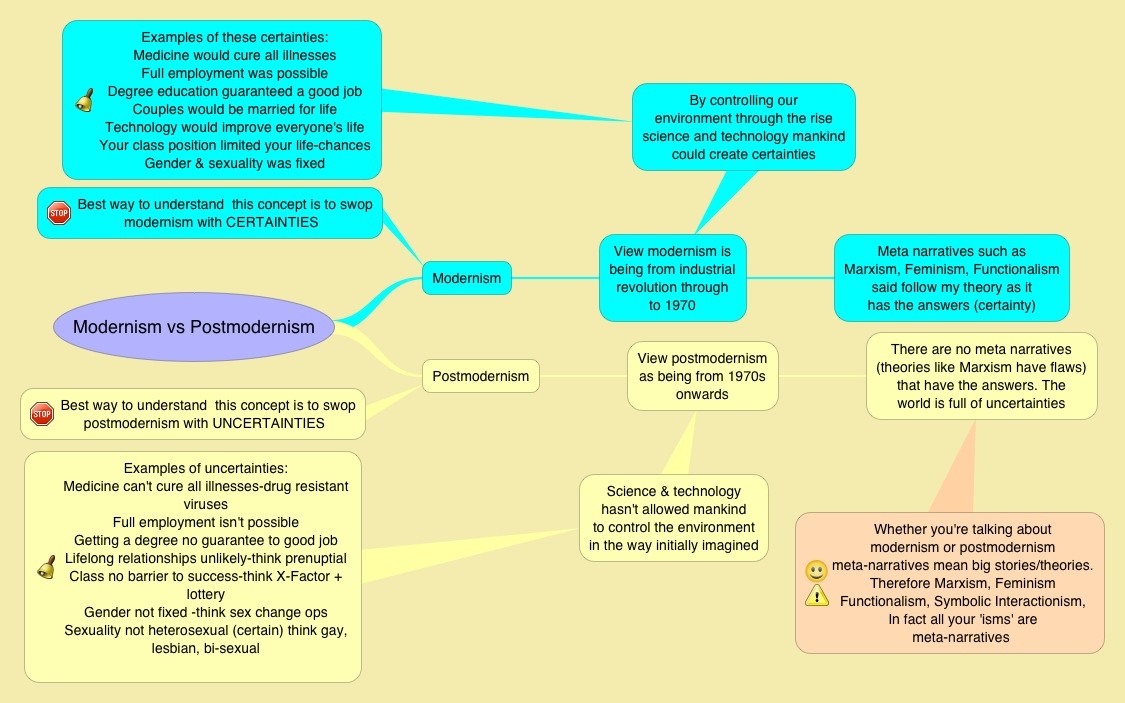
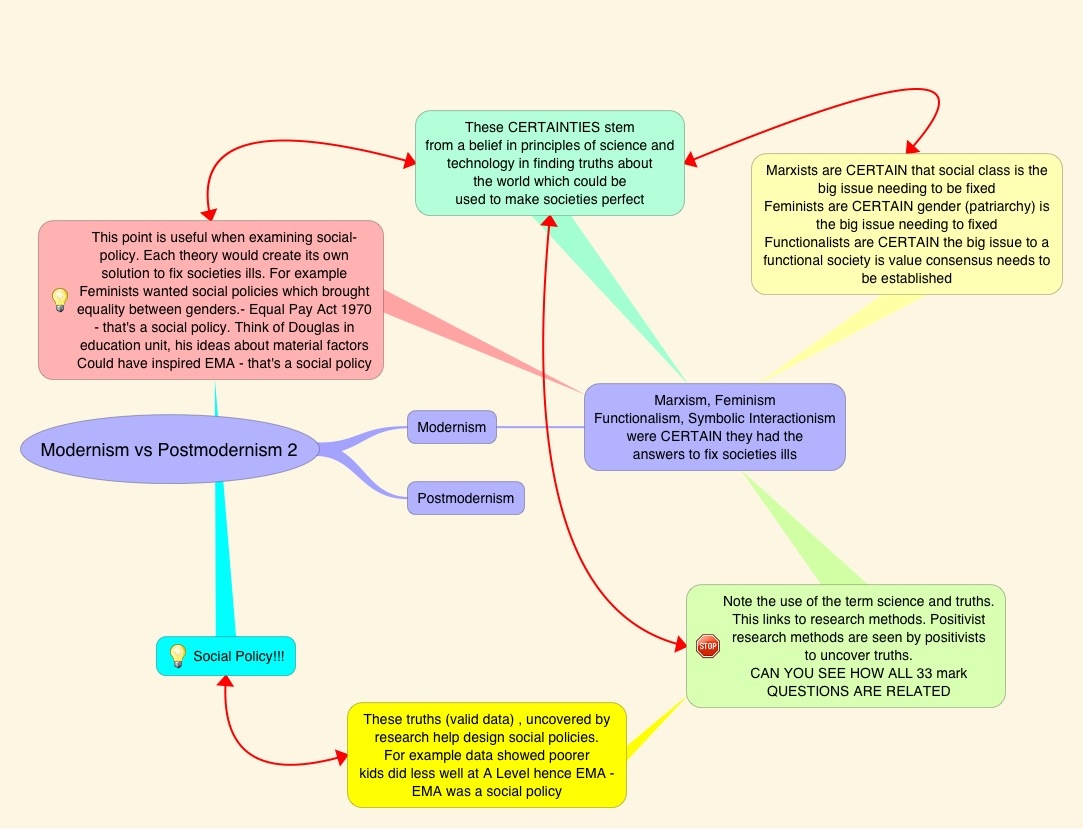

Understanding the connection between social theory & research methodologies
Understanding Feminism
Understanding Symbolic Interactionism

The following podcasts examine the key areas of sociological research methods. Why not use these in conjunction with the revision images for that complete revision experience?
Factors that affect the choice of research methods
Quantitative Secondary Sources
Evaluation of structured interviews
Below are a selection of Education revision podcasts allowing you to gain even greater understanding of this topic.
Education in Britain untill 1988
Education in Britain from 1988 onwards
Assessing Functionalist and Marxist Perspectives
Explaining social class differences in education and achievement
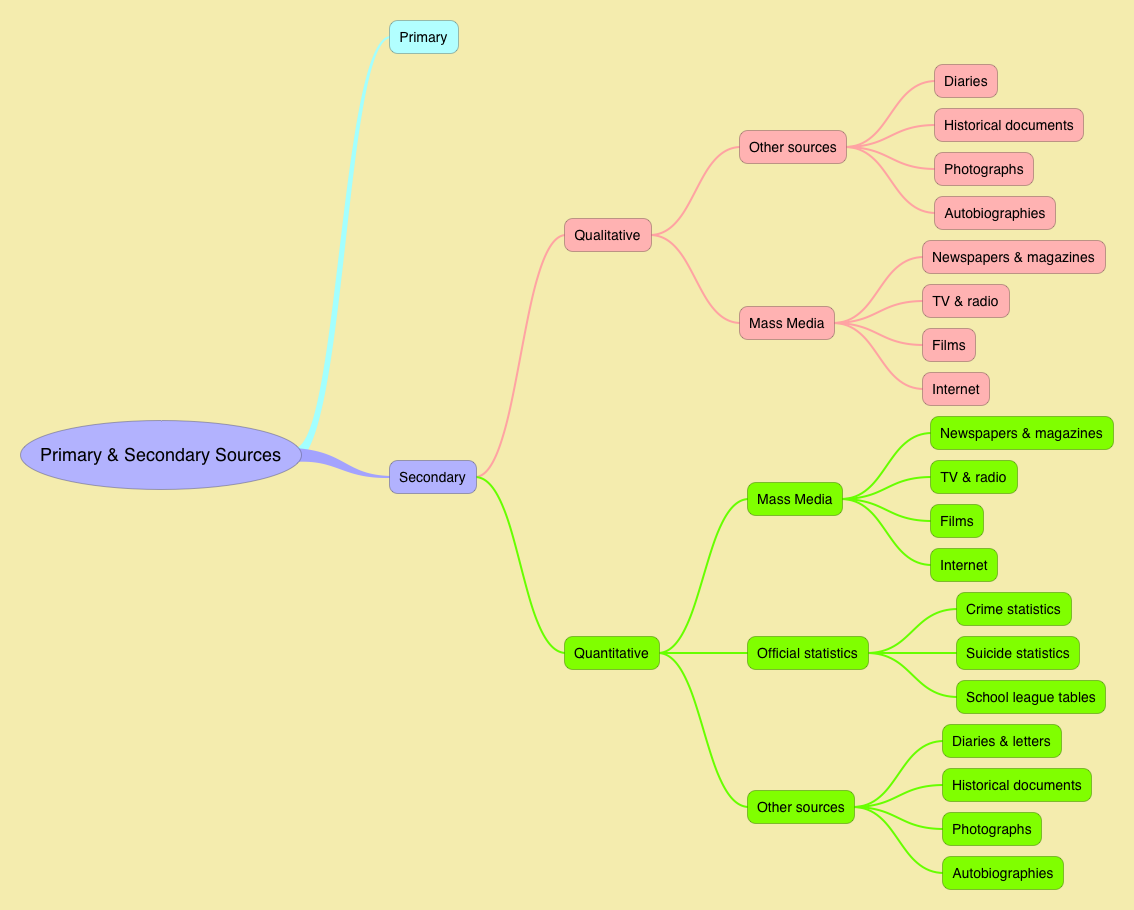
While the above image focuses on secondary sources of data, the image below focuses on primary sources of data.

The image below examines the advantages of official statistics.

While the image below examines the problems with official statistics.

The next three podcasts provide a research methodology overview. This dynamic is particulalry important to understand when answering questions such as “Is sociology a science?”
As you can see below there are numerous powerpoints to help you with your revision. In addition there are also a wide selection of podcasts explaining to help you with your revision, including some on Research Methodologies and Social Theory.

 sociologytwynham.com