
Contemporary families are changing in ways that suggest to some that the family is in decline. Baca Zinn and Eitzen show how social forces impact families and cause them to change over time.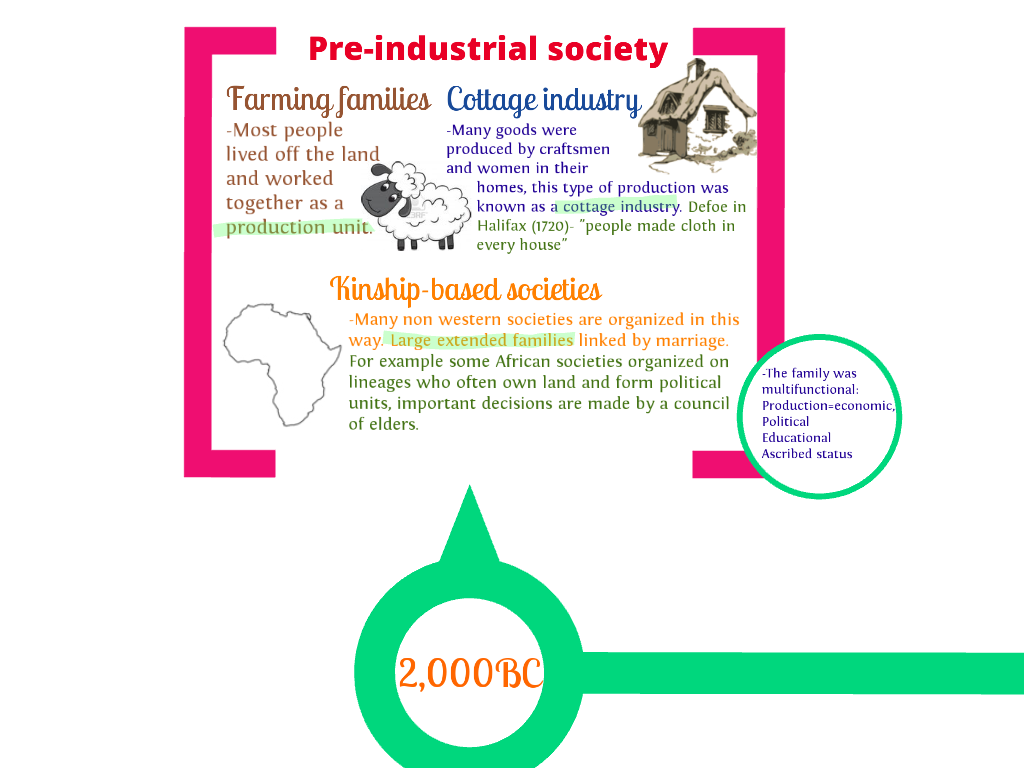
Pre-Industrial Families 1600-1800 had large numbers of children. Family life in the pre-industrial period was characterized by the dominance of a family-based economy which is explored in more detail pictorially on this page.
All family members worked at productive tasks differentiated by sex and age. No sharp distinction was made between family and society. In addition to its economic task of providing employment, the family performed many functions such as heath-care, education, welfare etc.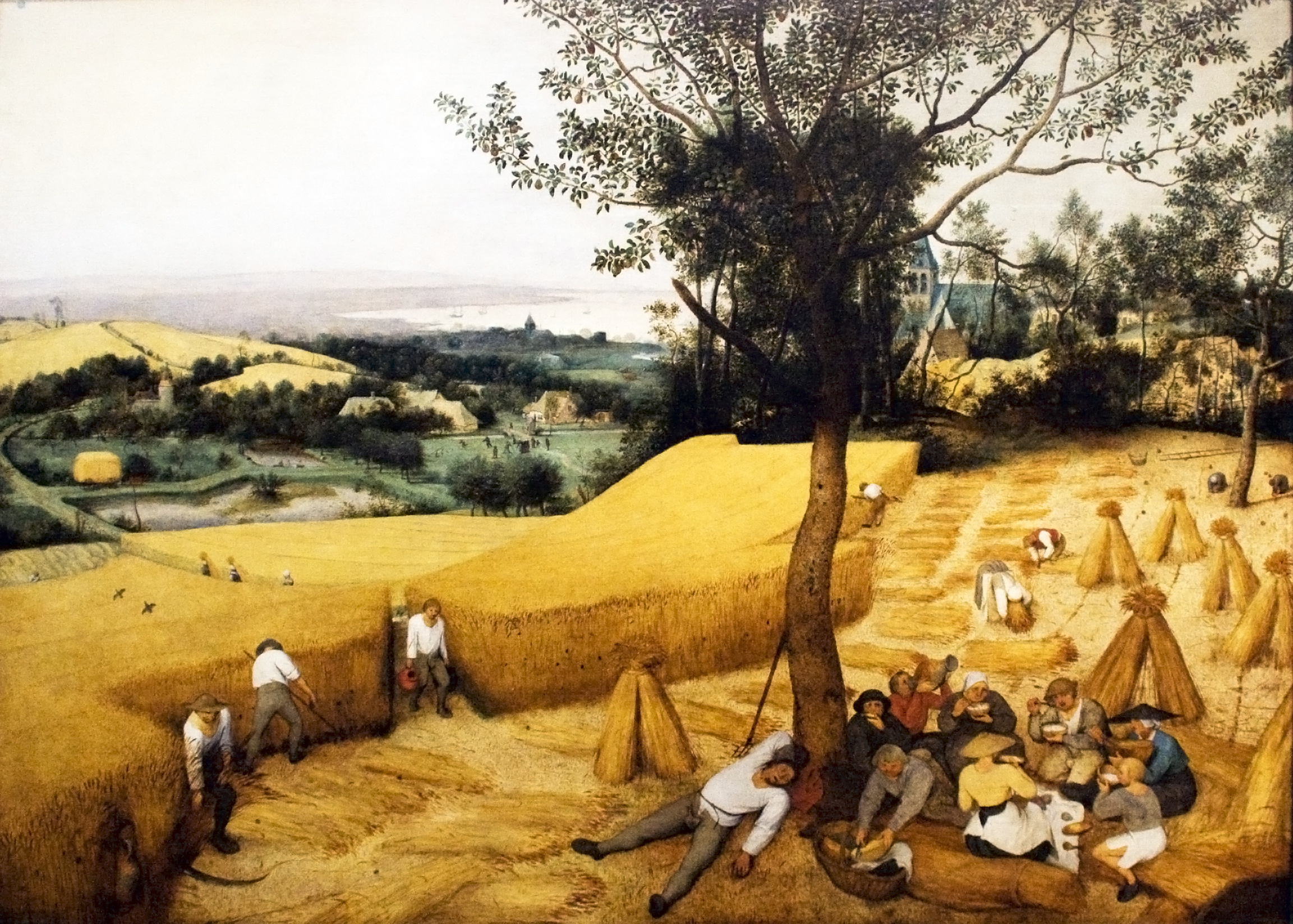
B. Family Structure and Household Composition – this consisted of male head of the family, his wife and children, his aging parents (who will have passed on the farm). Together they worked as a productive unit producing the things needed to sustain the family’s survival. The key point is the kin relationship during this period is one of binding obligations. The obligation of carrying on working on the farm for the family’s survival.
C. Wives and Husbands – in the early colonial period, marriages were arranged based on the social and economic purposes of larger kin groups. Romantic love was not wholly absent, but marriage was more of a contractual agreement based upon a specific and sharp gender-based division of labour. A shortage of women in this period enhanced the status of women, but despite this, wives were unquestionably subordinate to their husbands.
D. Children – families of the premodern period reared large numbers of children, but household size was not very large because childbearing extended over a long span of years. Children’s religious training was intensive and discipline severe. Childhood was recognized as a separate stage of development, and children, like spouses, were viewed in economic terms. Social class and regional differences, however, are responsible for some variation in the lives of children.
The following prezzi provides an overview of the above points.
Return to changing family structures
Marxist feminists see women as essential a tool or instrument of capitalist oppression,
- In contrast radical feminists focus on patriarchy as the instrument of oppression (emasculation) within the home.
- Bryson (1992) identifies two key characteristics of radical feminism:
- it’s a theory of and by women, rather than an amendment of predominantly other androcentric theories
- it sees the oppression of women by men (patriarchy) as universal
For Delphy and Leonard (1992) argue it is men rather than capitalism who benefit the most from exploiting women and the family is central in maintaining this structure as:
- families are structured; in this structure men dominate while women and children are subordinate (very few families are matriarchal)
- as man’s position in the family is the dominant one he tends to make the final decision on family issues
- the type of work family members do is determined by gender and marital status
- when women have paid employment outside the home, they still have to undertake household tasks – this is known as the dual burden
- while some women have paid employment outside the home while still remaining responsible for the majority of household tasks and care for children – what Duncombe and Marsden (1995) termed the triple-shift
The above points are explored in more detail below:
Delphy and Leonard recognise men do some housework, the extent of this is rather limited as they show how all the unpaid housework and childcare is done by women (Ann Oakley pointed out in the 1970s that housework is tough, demanding and unrewarding)
Women also make the largest contribution to family life, while men contribute the least but gain the most!
Women carry out housework and caring roles within the family as well as supporting men in their leisure and work activities.
They also help men emotionally in the home by providing ‘trouble free sex’ as ‘men best unwind post-coital’ w
Duncombe and Marsden argue, how from an early age girls are trained to become emotionally skilled in empathy so they can actively participate in ’emotion work’
Criticisms
- Functionalists and even the New Right would argue that feminists put too much emphasis on the negative side of family life because it ignores the possibility that women enjoy running the home, raising children and being married
- it ignores Wilmot and Young’s ideas on the symmetrical family, and how there’s greater equalities in family life with shared conjugal roles
Return to family overview page
Feminist writers have had a lot more influence on the family than any other perspective.
- Marxist feminists emphasise how capitalism uses the family to oppresses women, and the harmful consequences of the family to women’s lives
- For example Margaret Benston (1972) argued that capitalism benefits from an army of women – an unpaid workforce- who are compliant and willing to do as they’re told because they’ve been socialised to act this way Benston said:
- “The large amount of unpaid labour performed by women is very large and very profitable to those who own the means of production.”
- This social reproduction of labour power isn’t just about producing children as future healthy workers, it’s also about ideological conditioning – to make women passive
- The Marxist feminist position is further enhanced by Fran Ansley (1972)
- she grabs hold of Parsons’ view of the family as functioning to stabilise adult personalitiesand turns into Marxist idea
- By arguing Parsons’ ‘function’ of the family (particularly the wife) as an ’emotional safety-valve’ to absorb the husbands frustrations is created by the capitalist system
- By being an emotional safety valve, the wife helps keep capitalism stable – this explanation views society as one of conflict rather than consensus as Parsons’ does
- Diana Feeley (1972) argues the family socialises the young into a false consciousness of class inequality and stratification
- Feeley position is similar to that of Althussar’s, arguing familial ideology is designed to teach passivity not rebellion
Evaluation
Criticism of Marxist feminist perspectives of the family comes from sociologists who highlight how:
- Marxist feminism places a lot of emphasis on nuclear family ignoring family diversity (in the same way functionalists do)
- the approach also assumes a degree of passivity with women, for example some women might actively choose their social role as a wife and mother
- some women might have an ‘active’ matriarchal rather than being a ‘passive’ victim of patriarchy

In sociology there are various methodologies, positivism, interpretivist, feminist and postmodernist. Each of these methodologies argues that knowledge about the social world around us is best discovered by using a particular research method. You can explore the role of the various methodologies in the image below.

Methodology is the study of methods used, not the research methods themselves. Therefore a methodology is the idea (philosophy) behind the chosen research method, what is known as epistemology. For example a sociologist might be keen on using a scientific approach (positivist) in his or her research. Therefore their chosen method could be to apply the research methods (quantitative methods) in the natural sciences and use the laboratory method.
Their use of the laboratory method is because this particular sociologist is argue that knowledge about the world is best discovered via science – this is known as their methodological justification (the philosophy behind their chosen method, in this case the experimental or laboratory method). It’s worth pointing out that Comte was the first sociologist to advocate the use of scientific methods in sociology. His methodology was based on the idea that physical laws governed the world and these laws were measurable – which warrantied the use of scientific research methods to discover them.
The clip below runs through the principles of positivism.
In contrast to positivists interpretivists argue gaining understanding is the job of the sociologist rather than the collection of data through a scientific process.
The clip below runs through the principles of interpretivism.
Feminist methodology argues exist methodologies are androcentric. Therefore to combat androcentricism feminist research such as Oakley advocated the use of ethnographic research methods (qualitative methods) in order accommodate more sensitive interviewing techniques and gaining understanding about the world from a female perspective (an approach which is questioned by those sociologists preferring a scientific approach).
Is sociology a science? The answer to such a question continues to cause debate. Yet one thing for certain is early sociologists were certain the subject was a science. Comte’s (1998-1857) position was sociology needed to be based on the methodology of the natural sciences. This was because he saw the world as being governed by ‘laws’ or ‘facts’ which must objectively measured and quantified. This meant social scientists could identify causes and their subsequent effects on the social world.
Durkheim’s ‘Rules of Sociological Method’ (1895) effectively developed Comte’s argument by setting out his reasoning (methodology) for the need of sociologists to adopt the methods of the natural sciences. This was because Durkheim viewed the social world as being governed by ‘facts’. In the same way the natural world is governed by facts, such as gravity, society is governed by what he termed ‘social facts’. For Durkheim these social facts are “objectively real,” and therefore measurable.
Durkheim’s study of suicide exemplified his rules of sociological method. Suicide rates are social facts, in the sense suicide is a product of social facts (real, living forces which act on individuals to determine an individual’s behaviour in the same way gravity determines (constrains our behaviour).
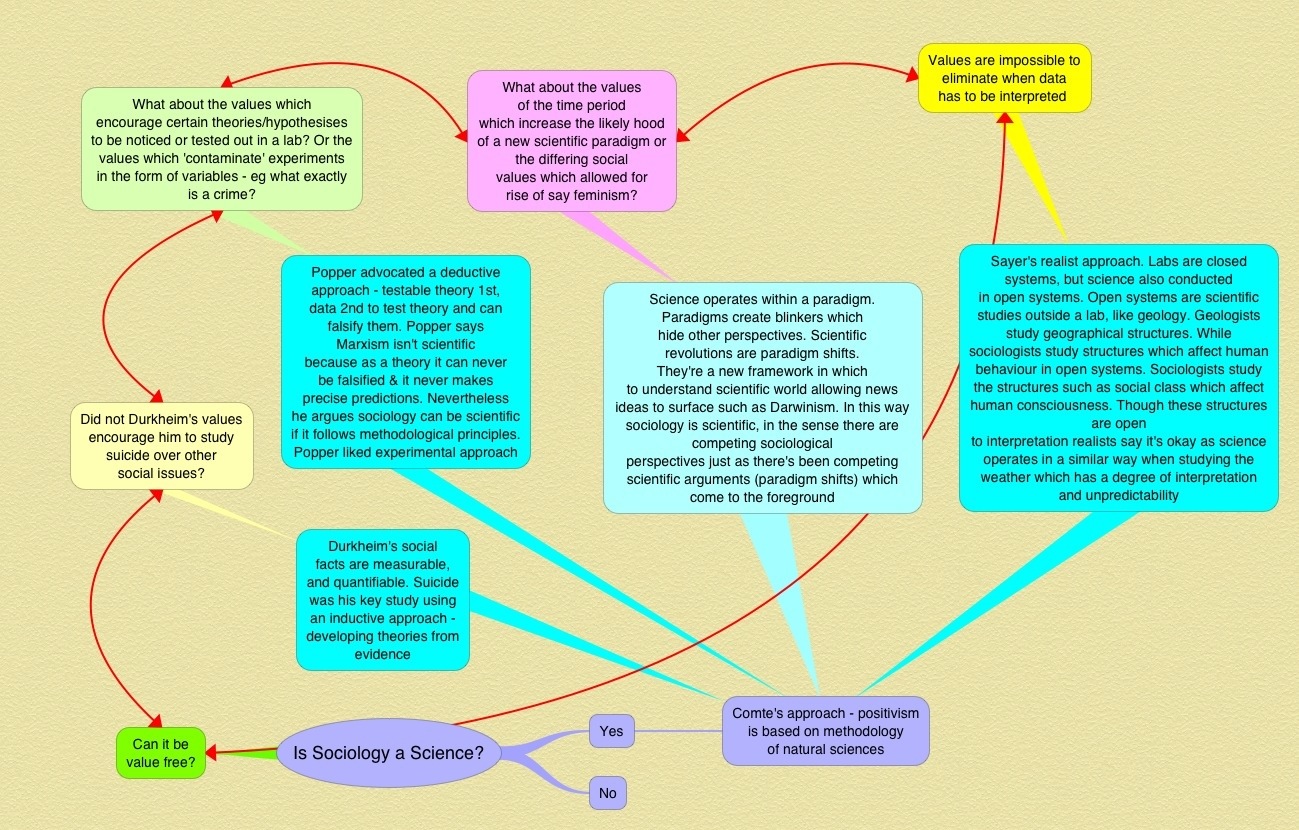
The first image below provides a broad overview of all the methodologies. The middle image explores one way of answering the role of values in sociology. While the last image examines the scientific method sometimes used in sociology.

Methodology
Methodology and social theory – a connection?
Are sociological methodologies scientific?
Is sociology a science and can it ever be value free?
Different methodological approaches in sociology
Postmodern
Feminist
While much of 19th century sociology functionalism and Marxism was focusing on with how social structures, external to the individual, created the individual sense of self (for Marxist’s it is social-class, for functionalists it is functional perquisites) symbolic interactionists said it was individuals themselves.
George Mead (1863-31) came up with such an approach. He argued the ‘self‘ is constructed and reconstructed through interactive behaviour – hence the term interactionist. He argued sociologists need to understand the development of the self – the person who you are – and imagine yourself in other social roles. This is a bit like having a conversation with yourself, a sort of role playing. Children do this all the time, role playing, pretending to be in other social situations like playing doctors and nurses -in preparation for growing up.
Such a process is termed human agency, how you actively shape the self in relation to how others see you. This is because Mead said the self can only develop through interactions with other people, individuals learn from other people to acquire their own sense of self.
Therefore:
- individual behaviour is not determined by external social forces as Marxist and functionalists would have us believe, but is created by self-conscious interactions with others
- the meanings of these interactions create the self, as an individuals identity is modified from how individuals perceive how they are being seen by others
- such interactions are constantly modified
- from this people make society, rather than society making people (as with Marxist and functionalists)
Cooley (1998) termed this as the ‘looking glass-self’ – the idea that our image of ourselves is reflected back to us (like a mirror image does) and individuals react accordingly. Therefore the process of socialisation can been seen to be actively constructed by our interaction with others (symbolic interactionism) or is seen to be imposed upon us via external stuctures (structuralist approaches such as Marxism, functionalism and feminism). The image below will help you.
Alternatively you can follow these links to two lectures on the Self in Society. Lecture 1 and Lecture 2.

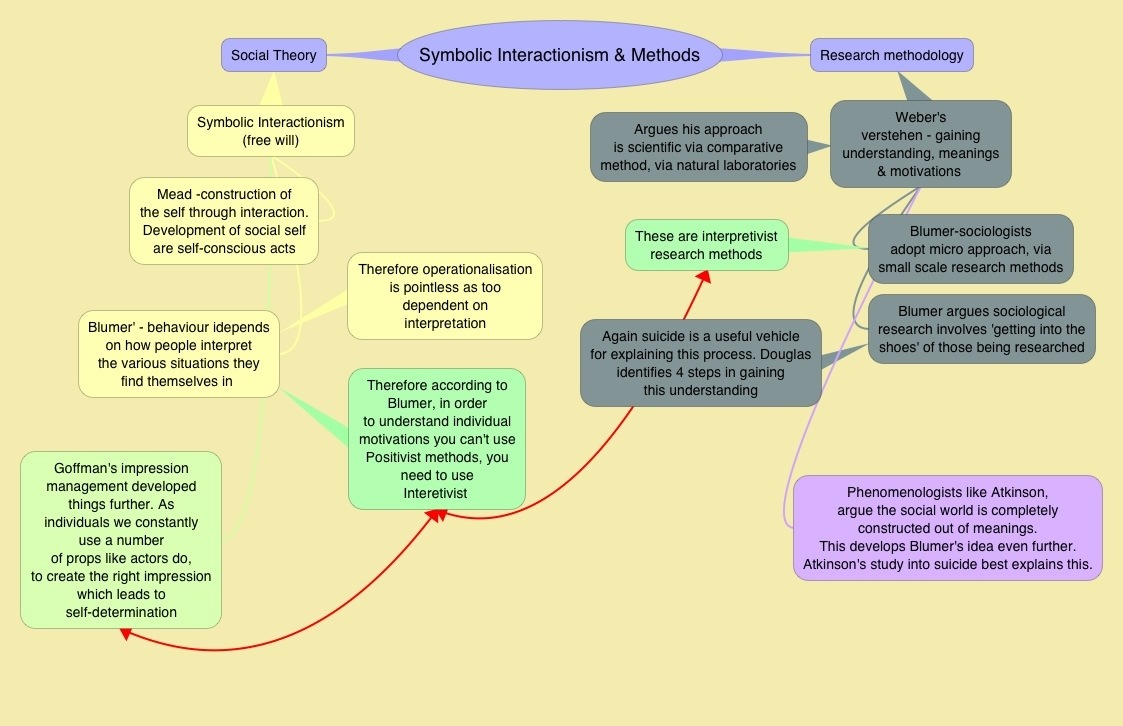
From the ideas contained in the above it becomes apparent a different type of research method is needed in order to gain understanding of why people interact with people the way they do (think of a student/teacher interaction). That’s why symbolic interactionists developed an interpretivist research methodology (which are qualitative research methods) from – see image blow – so the sociologist can gain ‘understanding’ about the meanings people give to social situations, something they (symbolic interactionists) say you never get from positivist research methodology (which are quantitative research methods).
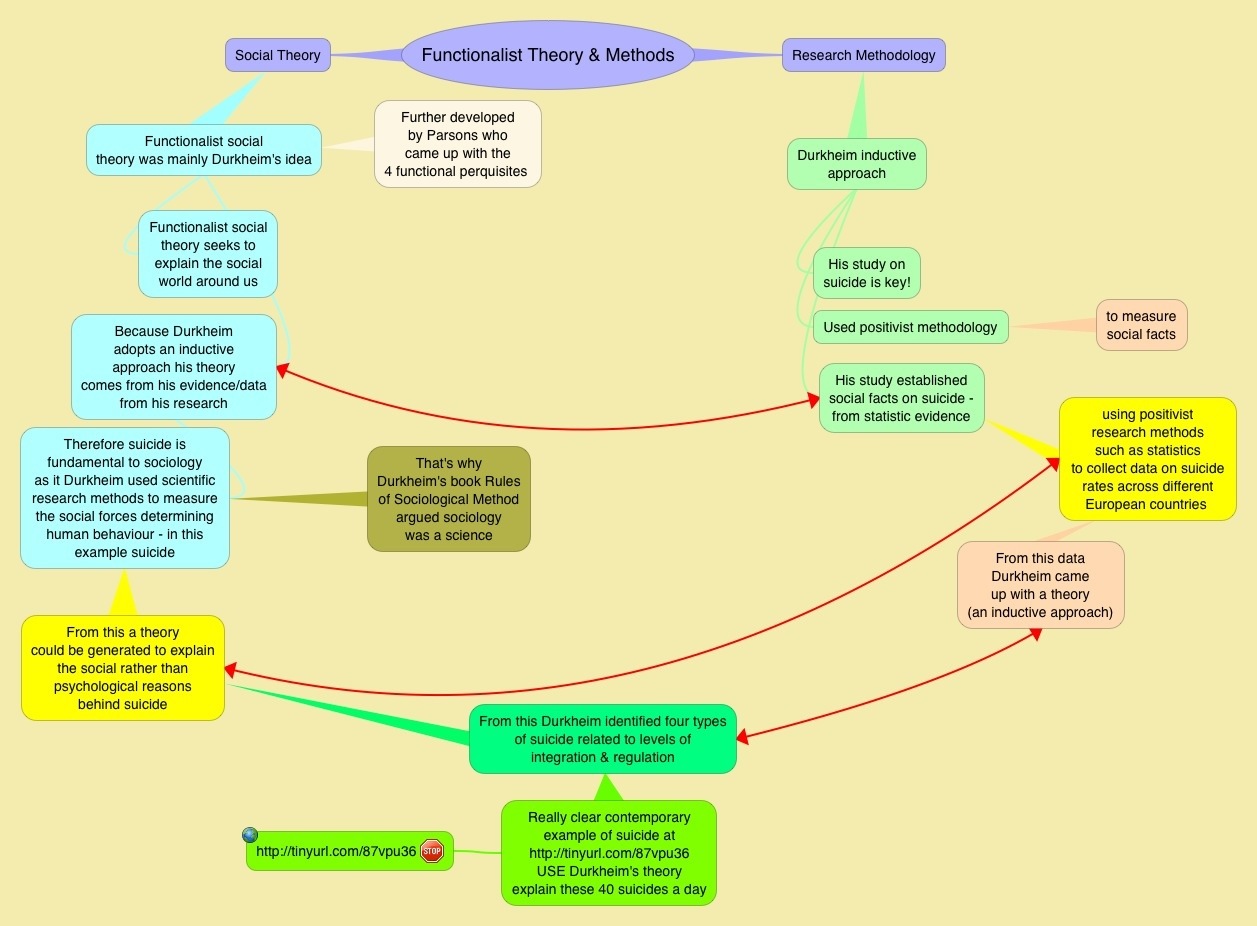
To explain, the image below illustrates the connection between symbolic interactionism and interpretivist methodology (which uses interpretivist methods, which are qualitative processes eg open interviews). While beneath it, the second image shows the connection between functionalist social theory and positivist methodology (which uses positivist methods, which are quantitative processes eg closed interviews).
In essence right realism moved away from social theories of crime towards more explanations centred around the individual. Their ideas contained several themes – which sometimes seemed to contradict each other.
- Wilson (1983) – social causes of crime – unemployment, deprivation etc – aren’t sound because from the 1950s there’s been a rapid improvement in social conditions. During this period crime rates haven’t decreased but increased.
- Wilson and Herrnstein (1986) – crime as biological roots which can’t be engineered out of individuals
- People commit crime through rational choice – this means recidivists simply lack self-control (Hirschi, 1990)
- Murray (1990) argues crime rates exploded declining moral standards particularly in the development of a criminally motivated ‘underclass’. This underclass is best optimised by Vikki Pollard below.
In Wilson’s book, ‘Thinking About Crime’ (1975) criminality is accounted for by the existence of ‘lower class’ people like Vikki Pollard who ‘attach little importance to the opinion of others’. In his later work Crime and Human Nature (1986) Wilson (along with Herrnstein) develops this theme by identifying causal and correlational factors through a bio-social explanation of recidivist behaviour.
Vikki Pollard Traits of impulsiveness, indifference to others and lacking any form of self-control which are particularly found in dysfunctional families. They identified a theme common to all these areas – choice. As choice is a conscious act filtered through costs verses benefits, those people who haven’t developed the capacity of choice through genetic shortcomings.
Hirschi (1990) challenged Wilson’s merger of genetic determinism with the free will dimension of human nature.
All the above factors show how crime (from left-realist perspective) needs to be understood in the context of relative deprivation and marginalisation. Relative deprivation is best explained by watching the Mazda car advert below in the context of Pete Townsend’s definition of relative poverty.
Peter Townsend, pioneered a relative deprivation approach to poverty that covered a wide range of aspects of living standards, both material and social. For Townsend:
Individuals, families and groups in the population can be said to be in poverty when they lack the resources to obtain the types of diet, participate in the activities, and have the living conditions and amenities which are customary, or at least widely encouraged or approved, in the societies to which they belong. Their resources are so seriously below those commanded by the average individual or family that they are, in effect, excluded from ordinary patterns, customs and activities. (Townsend, 1979)
Being employed is a key factor in avoiding relative deprivation as it limits social exclusion – marginalisation. Left-realists position is without a consistent income people are placed on the margins of society (marginalisation) and one way of addressing being marginalised is to join a criminal subculture.
As you can see this is very similar to Merton’s concept of anomie (rather than Cohen’s subculture, as he stresses a non-utilitarian dimension to subcultures). It’s important to point out here, Lea and Young aren’t saying there’s a causal link between deprivation and crime as Marxists do, but it is the sense of injustice coming from being deprived – in other words this view looks at the contradictions causes when expectations are not met by the opportunities offered by society (that’s why it’s early I mentioned Lea and Young were looking at the social causes of crime).
Therefore watching adverts like the Mazda MX-5 advert above merely reminds you if you’ve haven’t got the tools (eg car) of such a lifestyle (throwing a Frisbee around in the sun, while wearing out your expensive car tyres) then you’re living on the margins of society and so are relatively deprived.
Other than addressing issues of relative deprivation what else do Lea and Young suggest?
 sociologytwynham.com